Holmes County Amish Country Access
Trying to find a place to hunt in Ohio's Holmes County can feel like searching for a needle in a haystack, especially with the region's unique landscape dominated by Amish farmlands. It's a beautiful, rich area, but the vast majority of land is privately owned, leaving many hunters scratching their heads about where to even begin. This guide is here to walk you through the realities of hunting access in Holmes County and provide actionable strategies for finding those coveted spots.
Understanding the Landscape of Holmes County Hunting
Holmes County, often synonymous with Ohio's Amish Country, presents a distinct set of challenges and opportunities for hunters. Unlike some other parts of Ohio, you won't find sprawling national forests or massive state wildlife areas. Here, the land tells a different story, one woven with generations of private ownership and traditional farming.
The Dominance of Private Land in Amish Country
The first and most important thing to grasp about hunting in Holmes County is that private land reigns supreme. We're talking about rolling hills, patchwork fields, dense woodlots, and small family farms that have often been in the same hands for decades, sometimes even centuries. This isn't like heading to Wayne National Forest Hunting where large tracts are openly managed for public recreation. Instead, nearly every acre you see belongs to someone, often an Amish family deeply rooted in their traditions and land stewardship.
This reality can be incredibly frustrating for hunters, especially those new to the area or accustomed to abundant public access elsewhere. You drive through, seeing prime looking timber and field edges, knowing deer are there, but the "No Trespassing" signs or simply the absence of any public land markers can be disheartening. It truly makes you feel like an outsider, peering in at a world of opportunities that seem just out of reach. This isn't a problem unique to Holmes County, of course, but the sheer density of private ownership, combined with the cultural nuances of the community, amplify the challenge significantly.
How Amish Land Use Impacts Hunting Opportunities
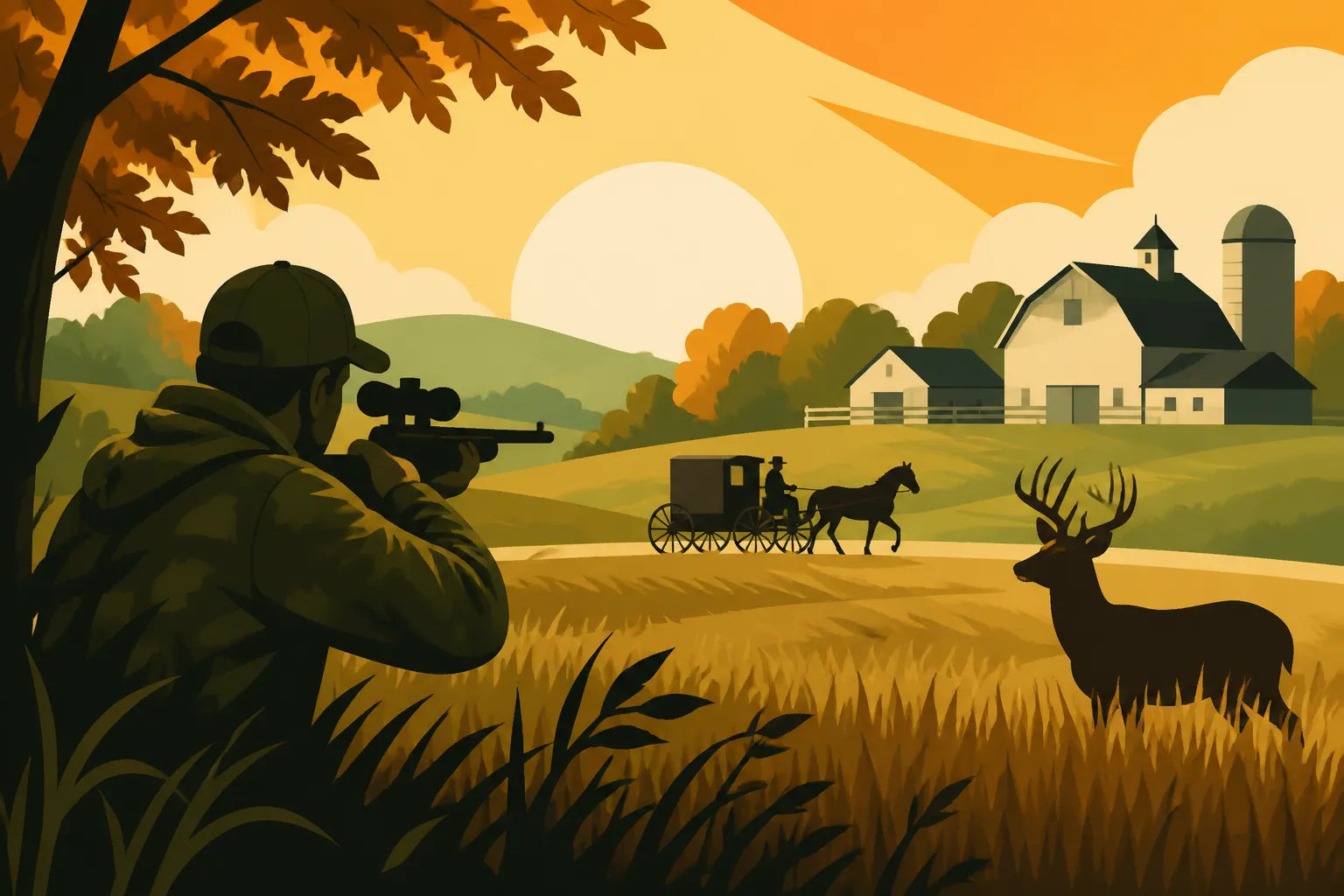
The way Amish families utilize their land directly influences the hunting opportunities available. You'll observe smaller, meticulously managed farms, often with livestock, gardens, and timber stands that are actively used for firewood or lumber. These aren't necessarily large, industrial monoculture fields, but rather diverse landscapes that can provide excellent cover and food sources for wildlife. The woodlots, though often smaller than what you'd find in Shawnee State Forest Hunting, can be incredibly rich in oaks, hickories, and other mast-producing trees, making them magnets for deer and squirrels.
Because of this intense land use, deer often learn to adapt, using the pockets of cover and transitioning between woodlots and fields under the cloak of darkness. This can lead to some truly impressive deer populations that are less pressured by widespread hunting, simply because access is so limited. However, it also means that when you do get permission, you might be hunting a smaller, more fragmented parcel. Understanding how these small farms connect, and how deer move between them, becomes crucial. You might find a small two-acre woodlot that connects two larger bedding areas, making it a powerful pinch point. Learning to read these smaller details on a map, perhaps using tools like onX Hunt or GoHunt, becomes paramount.
Strategies for Gaining Private Land Access in Holmes County
Given the prevalence of private land, your primary goal in Holmes County is to gain permission from landowners. This isn't always easy, but with the right approach and a healthy dose of persistence, it's absolutely possible. It often comes down to building relationships and showing respect.
The Art of Knocking on Doors and Building Relationships
This might sound old-fashioned, but in Amish Country, knocking on doors is often the most effective, and sometimes the only, way to gain access. Amish families, by and large, value face-to-face interaction and prefer to know who they are dealing with. A cold call or email might not even reach them, or might be dismissed out of hand. Instead, consider this an invitation to engage personally.
When you decide to go Knocking on Doors in Ohio Farm Country, timing and presentation are key. Don't show up in full camo, looking like you're about to jump a fence. Dress respectfully, maybe in clean, everyday clothes. Avoid Sundays, as this is a day of worship and rest for the Amish community. Mid-week, in the late afternoon or early evening, can sometimes be a good time, after the day's chores are winding down. Approach with politeness and genuine respect. Introduce yourself clearly, state your purpose, and be prepared to explain why you want to hunt their land. Are you looking for deer? Small game? Emphasize that you will be respectful of their property, their animals, and their way of life. Offer to share venison, help with some light chores, or simply provide peace of mind that you'll be a responsible guest. Building this trust is a process, not a one-time event, and a good relationship often takes multiple visits before permission is granted.
Leveraging Technology for Landowner Contact
While personal interaction is vital, modern technology can be a powerful aid in identifying potential landowners and planning your approach. Mapping applications like onX Hunt and GoHunt are invaluable for this. These apps allow you to overlay property lines onto satellite imagery, showing you exactly who owns what parcel. You can often see the owner's name and sometimes even a mailing address.
Using onX Layers for Ohio Land Status can help you scout from home, identifying promising woodlots or field edges, and then pinpointing the owner. This allows you to be strategic. Instead of aimlessly driving around, you can target specific properties that look promising. Once you have an owner's name, you can then plan your personal visit or, if appropriate for non-Amish landowners, a polite letter or phone call. Remember, technology is a tool to facilitate the conversation, not replace it. It helps you prepare, but the real work of relationship-building still falls to you. Having a clear understanding of Finding Ohio Property Lines also ensures you know exactly where you'd be hunting and can avoid any accidental trespass.
Understanding Ohio's Trespass and Permission Laws
Before you even think about stepping foot on private land, you need to have a clear understanding of Ohio's laws regarding trespass and permission. In Ohio, it's pretty straightforward: you need permission to hunt on private land. This isn't just a courtesy; it's the law. Ohio Trespass and Permission Law states that even if land isn't explicitly "posted" with signs, you are still presumed to need permission to hunt, fish, or trap on it.
While a verbal agreement can sometimes be enough, especially with landowners you've built a relationship with, it's always a good idea to seek written permission if possible. This protects both you and the landowner. For Amish families, a simple handshake agreement might be their preferred method, and you'll need to respect that. However, for any non-Amish landowners, or if you feel more comfortable, a written note with dates and boundaries can prevent misunderstandings down the road. Never assume implied permission, and if you're ever in doubt, err on the side of caution and don't hunt until you've received clear, explicit permission. Ohio also has strict rules about retrieving game from private land if it runs onto an adjacent property, so make sure to clarify that with any landowner you gain access from. This is crucial for avoiding any uncomfortable or illegal situations.
Here's a quick checklist for approaching landowners:
| Action Item | Why It Matters |
|---|---|
| Dress Respectfully | Shows you value their property and time. |
| Choose Appropriate Timing | Avoid Sundays, early mornings, or late nights. Respect their daily routines. |
| Introduce Yourself Clearly | State your name, where you're from, and why you're there. |
| Be Honest About Your Intentions | Specify what you want to hunt (e.g., Hunting Amish Country Farmland Deer). |
| Emphasize Respect for Property | Promise to close gates, avoid crops, respect boundaries. |
| Offer to Help (If Appropriate) | Small chores, sharing venison, or simply being a good neighbor. |
| Clarify Boundaries and Dates | Ensure you both understand where and when you can hunt. |
| Ask About ATV/Vehicle Access | Always clarify rules on vehicle use on their property. |
| Provide Contact Information | Offer your phone number in case they need to reach you. |
| Follow Up with Gratitude | A thank-you note or small token of appreciation goes a long way. |
Identifying Limited Public Hunting Options and What to Expect
While Holmes County is overwhelmingly private, it's not entirely devoid of public access. However, these opportunities are often small, scattered, and require diligent scouting. Don't expect vast tracts of unbroken wilderness, but rather smaller parcels that can be productive if you put in the legwork.
The Scarcity of Dedicated Public Hunting Lands
Let's be realistic: if you're looking for large state forests like Zaleski State Forest Hunting or expansive wildlife areas, Holmes County isn't your primary destination. There aren't many big, dedicated public hunting areas directly within the county lines. Any public land you find will likely be smaller, perhaps a single woodlot managed by the Ohio Department of Natural Resources (ODNR) or an easement along a waterway. These small parcels can be easily overlooked by other hunters who are searching for bigger, more obvious spots.
This is where your Scouting With the Ohio HuntFish App skills become incredibly valuable. Using the app, you can zoom into Holmes County and look for those faint green or yellow patches that indicate public ownership. Don't discount these smaller areas. A five-acre woodlot bordering a large private farm can be a fantastic pinch point, especially during the rut. Hunters often overlook these "micro-public lands," preferring areas with more elbow room. If you're willing to hunt tight, navigate challenging access points, and embrace a stealthy approach, these small pockets can yield surprising results. Just remember that cell service can be spotty in some of these rural areas, so knowing Using HuntFish Ohio Without Cell Service by downloading maps beforehand is a smart move.
Opportunities in Nearby Counties
If your search for Holmes County access proves too challenging, or if you simply prefer more expansive public hunting grounds, looking to neighboring counties is a smart move. Counties bordering Holmes, such as Coshocton, Tuscarawas, or Ashland, may offer more traditional public hunting opportunities. For example, Killbuck Marsh Wildlife Area, though primarily in Wayne and Medina counties, has fingers that reach closer to the Holmes County line, offering excellent waterfowl and wetland game hunting. Mohican State Forest, located primarily in Ashland County, provides more traditional timber hunting.
The trade-off, of course, is travel time. You might have to drive an extra 30-60 minutes to reach these larger public tracts. However, the benefit is often greater certainty of access, larger areas to roam, and potentially different types of hunting experiences. If your primary target is deer, then focusing on Ohio Deer Management Permits and understanding the regulations for each specific area will be essential, as permit requirements can vary. Always check the ODNR website for the most up-to-date information on public land regulations and access points in these adjacent counties before you plan your trip.
Building Trust and Ethical Hunting Practices in the Community
Hunting in Amish Country isn't just about finding a spot; it's about becoming a good neighbor and showing respect for a unique culture. Your actions, whether positive or negative, will reflect on all hunters and can impact future access for everyone.
Respecting Amish Culture and Farming Practices
When you gain permission to hunt on Amish land, you're not just getting access to a piece of property; you're being welcomed, to some extent, into their community. It's crucial to understand and respect their way of life. This means being mindful of their traditions, especially on Sundays. Hunting on Sunday, while generally legal in Ohio, might be seen as disrespectful by an Amish landowner who observes Sunday as a day of rest and worship. Always clarify expectations regarding Sunday hunting with your specific landowner.
Beyond that, observe their farming practices. Don't tramp through crops, leave gates open, or disturb livestock. Park your vehicle discreetly, and walk in quietly. Avoid bringing anything that might be perceived as a cultural imposition, like loud music or excessive gear that clashes with their simpler lifestyle. Your attire, even outside of blaze orange requirements, should be appropriate and non-flashy. The goal is to be a quiet, respectful presence that causes minimal disruption. After the hunt, remember to properly Field Dressing a Deer in Cold Weather and take care of your harvest discreetly, away from public view if possible, to avoid any undue attention or offense.
Offering to Help and Giving Back
Building a lasting relationship that ensures future hunting access often extends beyond just being polite. It involves a willingness to give back. Simple gestures can go a long way. After a successful hunt, offer to share some of your venison. Many Amish families appreciate wild game, and it's a tangible way to say "thank you."
Beyond that, consider offering to help with small tasks around the farm. Perhaps they need help stacking firewood, mending a fence, or retrieving a runaway animal. Don't just show up expecting to hunt; show up as someone who is willing to contribute. Even if they decline your help, the offer itself speaks volumes. By being a reliable, respectful, and helpful presence, you're not only securing your own hunting opportunities but also fostering a positive image of hunters within the community. This can, in turn, open doors for other hunters in the future. Remember to Checking an Ohio Deer Online as soon as possible after harvest and follow all regulations, as this reflects positively on your responsibility as a hunter. And don't forget to secure your Ohio Resident Hunting License Options well in advance.
Disclaimer
This article is for general informational purposes only and does not constitute professional advice. Laws, prices and regulations vary by location and change over time. Consult a qualified professional for guidance on your specific situation.