Retrieving Game From Private Land in Ohio
Oh, the sinking feeling when you’ve made a great shot on a deer, only to watch it bound over the fence line onto property where you don't have permission to hunt. It’s a frustrating, heartbreaking situation that almost every Ohio hunter has faced at some point. You’ve put in the time, done your scouting, and executed perfectly, but now your hard-earned game is technically out of reach. This guide is here to help you navigate the tricky waters of retrieving game from private land in Ohio, offering practical advice and ethical considerations to help you recover your harvest respectfully and legally.
Understanding Ohio's Trespass Laws for Game Retrieval
Before you even think about stepping foot on someone else's property, even with the best intentions, it's crucial to understand the legal framework in Ohio. Trespassing, even for game retrieval, is still trespassing. It’s not something to take lightly, as property owners have every right to protect their land and privacy. This isn't just about avoiding a legal headache; it's about showing respect for fellow landowners.
The "No Trespassing" Sign and Unwritten Rules
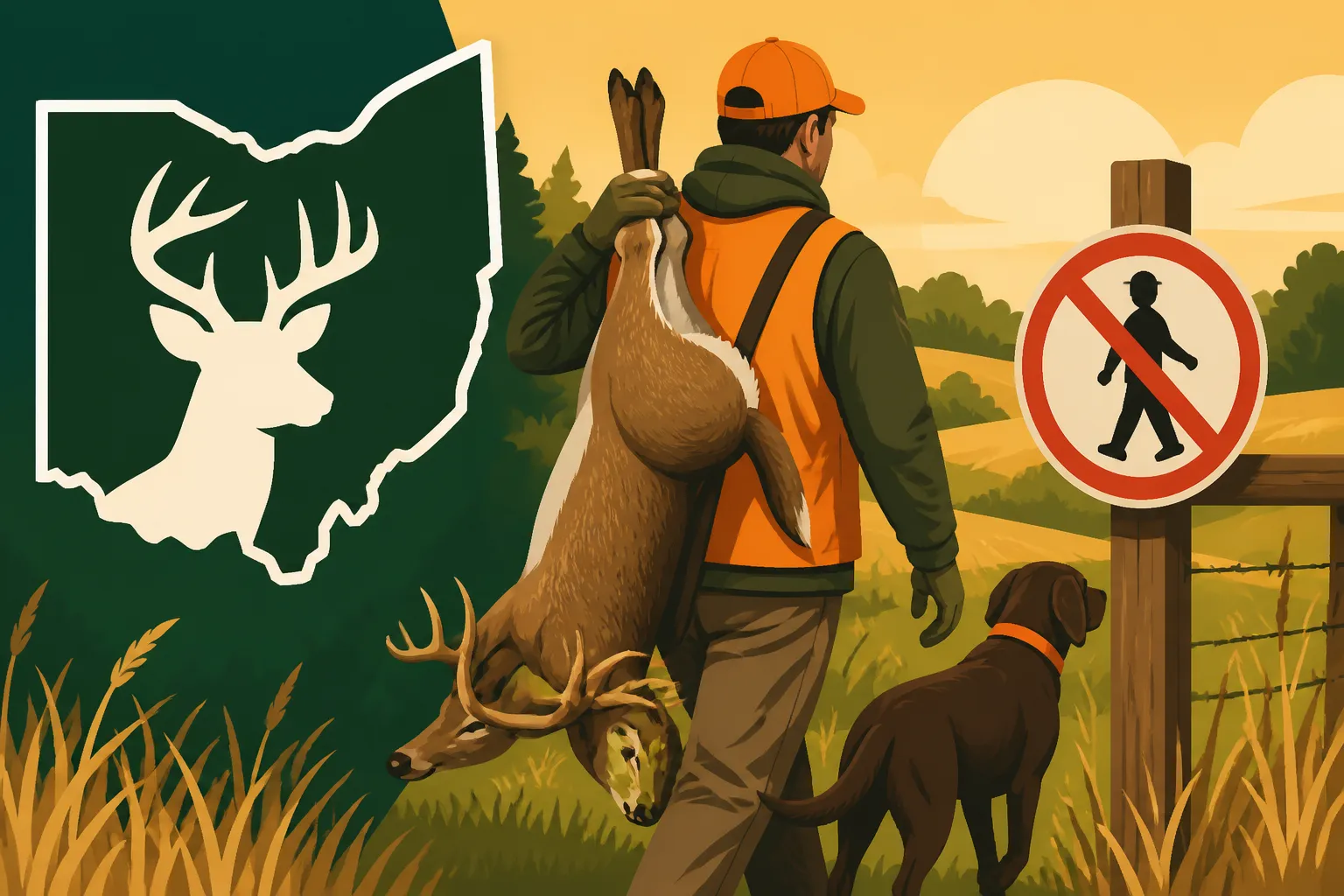
In Ohio, a "No Trespassing" sign isn't just a suggestion; it’s a clear legal boundary. If a property is posted with these signs, or if it’s clearly fenced, cultivated, or otherwise marked to indicate private ownership, you are prohibited from entering without explicit permission. Even if there isn't a sign every 50 feet, if it's obvious private land, the same rules apply. You might have heard whispers around deer camp about an "implied permission" for game retrieval, but in Ohio, that's simply not the case. The law is pretty black and white: you need permission to enter. Many folks don't realize that even stepping one foot onto private land to peer over a fence or to scout for sign could be considered trespassing if you don't have the owner's blessing. This is why understanding Ohio Trespass and Permission Law is so vital for every hunter.
It’s not just about the law, though. There's an unwritten code of conduct among hunters and landowners. Most landowners, if approached respectfully, understand the desire to recover a downed animal. However, showing up unannounced, especially with a firearm or a group of friends, can quickly sour any chance of getting that permission. Think about it from their perspective: a stranger appearing on their land, perhaps near their home or livestock, can be alarming. Always approach with courtesy and make your intentions clear.
Verbal Versus Written Permission for Entry
When it comes to getting permission, verbal consent is legally binding in Ohio, but written permission offers an extra layer of clarity and protection for both parties. Imagine this scenario: you knock on a farmhouse door, explain your situation, and the landowner gives you the go-ahead. Great! But what if you encounter a family member or farmhand who wasn't aware of the permission? Or what if a game warden asks to see your proof of access? A simple note or text message can save a lot of confusion and potential issues.
For game retrieval, verbal permission is usually what happens in the moment, but it's always wise to ask if they'd mind sending a quick text or writing a brief note. It’s not about mistrust; it’s about preventing misunderstandings down the line. Many experienced hunters carry small note pads or even use their phones to get a quick confirmation text. Remember, the key is clear communication. If you get a "yes," confirm the boundaries and duration of your permission. Is it just to track? Can you bring your weapon? Can you use a tracking dog? All these details matter. This also directly relates to the question of Do You Need Written Permission in Ohio? for general hunting, which often has different implications than short-term game retrieval.
Legal Recourse for Denied Retrieval
This is the tough part. What happens if a landowner flat-out denies you permission to retrieve your game, even after a respectful request? Unfortunately, in Ohio, the landowner has the legal right to refuse you access. You cannot force entry. While this can feel incredibly unfair and frustrating, especially if you know the animal is just on the other side of the property line, their property rights supersede your desire to retrieve game.
If you are denied, your options become limited. You cannot legally trespass. Your best bet is to calmly explain the situation, perhaps offer to bring a game warden as a neutral third party if the landowner seems hesitant or suspicious, but ultimately, if they say no, you must respect that. A game warden might be able to mediate or, in some cases, might even be able to retrieve the animal themselves (though this is not guaranteed and often depends on the specific circumstances and the warden's discretion). Attempting to retrieve game by force or by sneaking onto the property can lead to serious legal consequences, including fines and even hunting privilege suspension. It’s a bitter pill to swallow, but maintaining a good reputation as a hunter and respecting private property is paramount.
Steps to Take When Game Crosses a Property Line
The moment you realize your deer has gone onto adjoining private land, a flurry of emotions can hit you. Frustration, anxiety, and a desperate urge to just go get it are common. But taking a deep breath and following a clear process can make all the difference in a successful and respectful retrieval.
Immediate Actions and Ethical Considerations
First, mark your last point of sign where the animal crossed the property line. Use flagging tape, a brightly colored hat, or even your pack. This is critical for showing the landowner exactly where the animal went and proving your claim. Then, do not pursue immediately if you don't have permission. Resist the urge to just jump the fence. Even if you're certain it's a mortally wounded animal, the potential for a confrontation or legal trouble isn't worth it.
Next, and this is crucial, contact the landowner as soon as possible. Time is often of the essence in game recovery, especially during warmer weather or if rain is on the way. The quicker you make contact, the better. While you're waiting to connect with the landowner, you can use the time to gather your thoughts, confirm your tracking plan, and even pack a small game retrieval kit with gloves, a knife, and perhaps a small tarp. Consider the ethical dilemma of losing an animal to spoilage versus the legal implications of trespassing. Most hunters would agree that making every effort to recover an animal is an ethical imperative, but it must be done within legal bounds.
Approaching the Landowner Respectfully
This is where your communication skills come into play. When you approach the landowner, whether it's by phone or in person, your demeanor is everything.
- Be polite and calm. Start by introducing yourself and clearly stating your purpose. "Hi, my name is [Your Name], and I was hunting on [your property/public land boundary] just over there. I shot a deer, and I believe it crossed onto your property near [describe location]. Would it be possible for me to retrieve it?"
- Be transparent. Offer to show them the blood trail, your last point of sign, and even your hunting license. Reassure them you will be careful and respectful of their property. "I'll be mindful of any crops or fences, and I promise to leave everything as I found it."
- Offer solutions. If they seem hesitant, offer to go without a weapon (if it's safe to do so and you have a clear shot placement). Offer to have a game warden accompany you. Even offer to field-dress the animal right there and drag it out quickly.
- Respect their decision. If they decline, thank them for their time and leave peacefully. You might not like it, but arguing or becoming aggressive will only solidify a negative impression of hunters. This is similar to the advice for Knocking on Doors in Ohio Farm Country to gain general hunting permission – respect and a good attitude open far more doors than aggression. Building these positive relationships is part of being a responsible hunter, and sometimes, a little advance work with neighbors before the season can prevent these headaches entirely.
When to Involve Law Enforcement or Game Wardens
If you're having trouble locating the landowner, or if your polite request is met with suspicion or outright refusal, contacting the local game warden or sheriff's department might be an option. It's important to understand that law enforcement isn't there to force a landowner to grant you access. Their role is primarily to enforce the law and mediate disputes.
- Game Warden: An Ohio Department of Natural Resources (ODNR) game warden understands hunting and game recovery. They can often act as a neutral third party, contacting the landowner on your behalf and explaining the situation. In some rare cases, if the animal is clearly visible and access is denied unreasonably, a warden might assist in retrieving it themselves, but this is a courtesy, not a legal obligation. It's worth a call if you're at an impasse.
- Local Sheriff/Police: For pure trespassing issues, local law enforcement is the authority. They typically won't assist in game retrieval unless there's a clear violation of law or a significant dispute, but they can be a resource if you're experiencing harassment or if the landowner is being unreasonable to the point of potentially violating some other statute (which is rare).
Remember, involving law enforcement should be a last resort. Your goal is always to resolve the situation amicably and directly with the landowner if at all possible. It’s about being proactive and prepared, not about immediately escalating to authorities.
Preparing for Potential Game Retrieval Issues
The best defense is a good offense, right? When it comes to hunting, this means doing your homework before the season ever begins. Proper preparation can drastically reduce the stress and legal ambiguity if your game crosses onto private land.
Pre-Season Scouting and Neighborly Relations
This is probably the single most effective thing you can do. Spend time in the off-season, and even before opening day, identifying property lines. Walk the boundaries of the public land or private parcel you hunt and note adjacent private properties. This is where tools like onX Hunt or GoHunt really shine, allowing you to see property ownership at a glance. Knowing who owns the land next door means you can potentially approach them before opening day.
Knocking on doors in the summer or early fall, introducing yourself, and simply asking for permission to retrieve a downed animal if the situation arises can be a game-changer. "Hey, I'm [Your Name], and I hunt the woods right next to your property. I just wanted to introduce myself and ask if, in the unfortunate event a deer I shoot crosses onto your land, I could have permission to retrieve it. I'd, of course, call first and respect your property." This proactive approach builds goodwill and trust, making a stressful situation much easier if it actually happens. You might even find opportunities for Getting Private Land Permission in Ohio for future hunts! Having these conversations before you have a wounded animal on their land makes a huge difference.
Using Mapping Tools Like onX Hunt and GoHunt
In today's hunting world, digital mapping applications like onX Hunt and GoHunt are indispensable. They provide detailed aerial imagery, topographical maps, and, most importantly for this discussion, property boundary lines and landowner information.
- Boundary Awareness: You can instantly see where your hunting grounds end and private land begins. This helps you make more informed decisions about shot angles and potential recovery routes.
- Landowner Contact: Many of these apps provide landowner names and sometimes even contact information (though phone numbers are less common). This makes it much easier to identify who to call when a deer crosses the line. No more guesswork or searching county plat maps!
- Pin Dropping: When a deer crosses, you can drop a pin exactly where it went over, giving you a precise location to show the landowner. You can also mark blood trails and the last point of sign.
- Offline Maps: Ensure you download offline maps for your hunting area. Cell service can be spotty in many prime Ohio hunting spots, especially in the Appalachian foothills. Having the map downloaded means you won't be caught without crucial information.
By using these tools, you're not just guessing; you're operating with accurate, real-time (well, as real-time as satellite imagery gets) information, which makes your requests to landowners far more credible and efficient. It's like having a detailed Reading Aerial Photos for Southeast Ohio Deer guide in your pocket, but specifically for property lines. This also ties into Finding Ohio Property Lines more generally for hunting, which these apps greatly simplify.
Carrying Necessary Documentation and Communication Tools
Being prepared means more than just knowing who owns the land. It means having the right tools on hand to manage the situation.
- Proof of Permission: If you were lucky enough to get pre-season permission for retrieval, carry a copy of that written agreement or a screenshot of a text message.
- Hunter's License/Permits: Always have your valid Ohio hunting license and any required deer permits readily available. This shows you're a legal, licensed hunter.
- Phone and Charger: A fully charged phone is your lifeline. Not just for calling the landowner, but for using your mapping app and, if necessary, contacting a game warden. Consider carrying a portable power bank.
- Pen and Paper: Sometimes, an old-fashioned pen and paper are still the best way to get a quick note of permission from a landowner or to jot down important details.
- Headlamp/Flashlight: If you're tracking close to dusk or into the night (which is often necessary for timely recovery), a good headlamp is essential. Remember to be mindful of Ohio's legal shooting hours when considering any nighttime activities. Blood Trailing After Dark in Ohio can be a risky endeavor if not handled properly.
Ethical Obligations and Best Practices
Recovering a downed animal isn't just about navigating property laws; it’s deeply rooted in our ethical responsibility as hunters. We owe it to the animal, and to the reputation of hunting itself, to make every reasonable effort to ensure a clean, quick kill and a successful retrieval.
Minimizing Impact and Respecting Property
When you do gain permission to enter private land, your actions immediately become a reflection on all hunters.
- Stick to the agreed-upon route: If the landowner gave you specific instructions ("follow the fenceline," "stay out of the cornfield"), adhere to them strictly.
- Go directly to the animal: Don't wander or sightsee. Your purpose is singular: retrieve your game.
- Protect crops and fences: Be incredibly careful around crops, livestock, and fences. If you need to cross a fence, do so in a way that causes no damage. If you open a gate, close it.
- Leave no trace: Pack out everything you pack in, and don't leave any trash, flagging tape, or other debris behind.
- Thank the landowner: A sincere "thank you" goes a long way. Consider offering a small token of appreciation, like a package of venison later in the season (if permissible by law) or simply a gift card for coffee. Even a thank-you note left in their mailbox can solidify a positive relationship for the future.
The Importance of Timely Retrieval
Timely retrieval is not just a courtesy; it's a critical part of ethical hunting. Delaying recovery, especially in warm weather, risks spoilage of the meat. This dishonors the animal and wastes a valuable resource.
- Warm Weather: If it's a warm October day, every hour counts. Meat can spoil quickly. This urgency can sometimes (but not always) sway a hesitant landowner if you explain the ethical need for speed. Even Field Dressing a Deer in Cold Weather has its own challenges; warm weather significantly amplifies spoilage risks.
- Predators: In areas with coyotes or other predators, a downed animal left overnight could become a meal for something else. While it's part of the natural cycle, as hunters, we aim for full recovery. Coyote and Predator Hunting in Ohio is common, but you certainly don't want them getting to your deer before you do.
- Respect for the animal: Leaving an animal to rot is anathema to most hunters. We aim for quick, clean kills and full recovery, honoring the life taken.
Table: Pros and Cons of Immediate vs. Delayed Retrieval (with landowner permission)
| Factor | Immediate Retrieval (with permission) | Delayed Retrieval (with permission, if necessary) |
|---|---|---|
| Meat Quality | High likelihood of excellent quality; less risk of spoilage. | Increased risk of spoilage, especially in warm weather. |
| Tracking Ease | Blood trail fresher, easier to follow. | Blood trail can fade, wash away, or be obscured by leaves. |
| Predator Risk | Very low chance of scavengers finding the animal. | Higher risk of coyotes or other predators finding the carcass. |
| Landowner Impact | Quick entry and exit, minimal disturbance. | Longer presence on property, potentially more intrusive. |
| Hunter Stress | Quicker resolution, less anxiety. | Prolonged anxiety and uncertainty. |
| Safety | Can track in daylight; better visibility. | May require tracking after dark, increasing risks and difficulty. |
Building Community Trust
Every interaction you have with a landowner, whether it's successful or not, contributes to the overall perception of hunters in Ohio. A positive interaction fosters goodwill, making it easier for the next hunter (or even you again) to gain access. A negative interaction, unfortunately, can close doors for years to come. Be an ambassador for ethical, responsible hunting. Show respect, follow the rules, and be thankful for any assistance you receive. Our collective ability to hunt, especially on private land or near its boundaries, depends on these relationships. When hunters build positive relationships, it strengthens the hunting community and ensures access for generations to come.
Disclaimer
This article is for general informational purposes only and does not constitute professional advice. Laws, prices and regulations vary by location and change over time. Consult a qualified professional for guidance on your specific situation.