Camping Rules on Ohio State Forest Land
Ever felt lost trying to figure out where you can actually pitch a tent or build a campfire on Ohio's public lands? It's a common headache, especially when different types of public ground have their own unique rules and regulations. This guide is going to walk you through everything you need to know about camping specifically on Ohio State Forest land, helping you plan your next rugged adventure with confidence and ensure you're always following the rules.
Understanding Primitive Camping on Ohio State Forests
Ohio's State Forests offer a truly unique opportunity for those of us who love to get away from it all and immerse ourselves in nature. Unlike many state parks with their developed campgrounds, flush toilets, and electric hookups, State Forests are designed for a more primitive, backcountry experience. This means you're often looking at dispersed camping – essentially, finding a suitable spot and setting up camp. It's a fantastic way to connect with the wild, whether you're backpacking deep into the woods or just looking for a quiet spot for the night.
The beauty of state forest camping lies in its simplicity and the sense of freedom it offers. You won't find marked campsites or reservations for most areas. Instead, you're expected to be self-sufficient and practice strict Leave No Trace principles. This type of camping requires a bit more planning and a deeper understanding of the rules than pulling into an RV park. It’s perfect for the hunter, the angler, or the hiker who wants to be close to their passion without the distractions of a crowded campground.
Dispersed Versus Designated Primitive Campgrounds
While much of Ohio State Forest land allows for dispersed, primitive camping, it's important to understand that some areas might have specific, designated primitive campgrounds. These are often still very rustic, but they might have a hand pump for water, a vault toilet, or established fire rings. The key difference is often their location and sometimes, a small fee.
For example, a state forest like Shawnee State Forest Hunting in southern Ohio offers vast tracts for dispersed camping, where you can simply hike in and find a suitable spot away from roads and trails. On the other hand, a place like Zaleski State Forest Hunting might have a designated backpacker's campground that is part of a larger trail system, providing a few basic amenities for those tackling the full loop. Knowing which type of camping you're aiming for is crucial because the rules can subtly change. Dispersed camping typically demands a much higher level of self-reliance and adherence to minimal impact practices. Always check the specific State Forest's website or contact the forest office directly before heading out, as rules can vary slightly between locations.
Permits and Fees for State Forest Camping
Here's where it can get a little tricky, and it's a common point of confusion for many. Generally, for dispersed camping within Ohio State Forests, no permit or fee is required. That's right, you can often just find a spot and set up! This is one of the most appealing aspects of state forest land for budget-conscious outdoor enthusiasts.
However, there are exceptions. If you're planning to use a designated primitive campground within a State Forest, there might be a small nightly fee involved. These fees are usually modest and help cover the maintenance of the basic facilities provided. It's not like the reservation system you'd encounter at a state park, but it’s still important to be aware. Always assume that if you're pulling into an area with marked sites, a registration box, or any kind of sign indicating a campground, there's likely a fee. The best way to confirm is to check the specific State Forest's webpage or call their office. Don't rely on old information; regulations can change, and you don't want to be caught off guard.
Key Regulations for State Forest Campers
The joy of primitive camping in Ohio State Forests comes with a responsibility to respect the land and other users. The rules aren't there to make your life harder, but to protect the natural resources and ensure everyone can enjoy the wilderness experience. Ignoring these can not only lead to fines but also damage the very environment you're there to appreciate.
It's really all about common sense and being a good steward of the land. When you're out there, you're part of the system, and your actions have an impact. Thinking ahead about how to minimize your footprint is a crucial part of the state forest camping ethic.
Campfire Safety and Firewood Collection
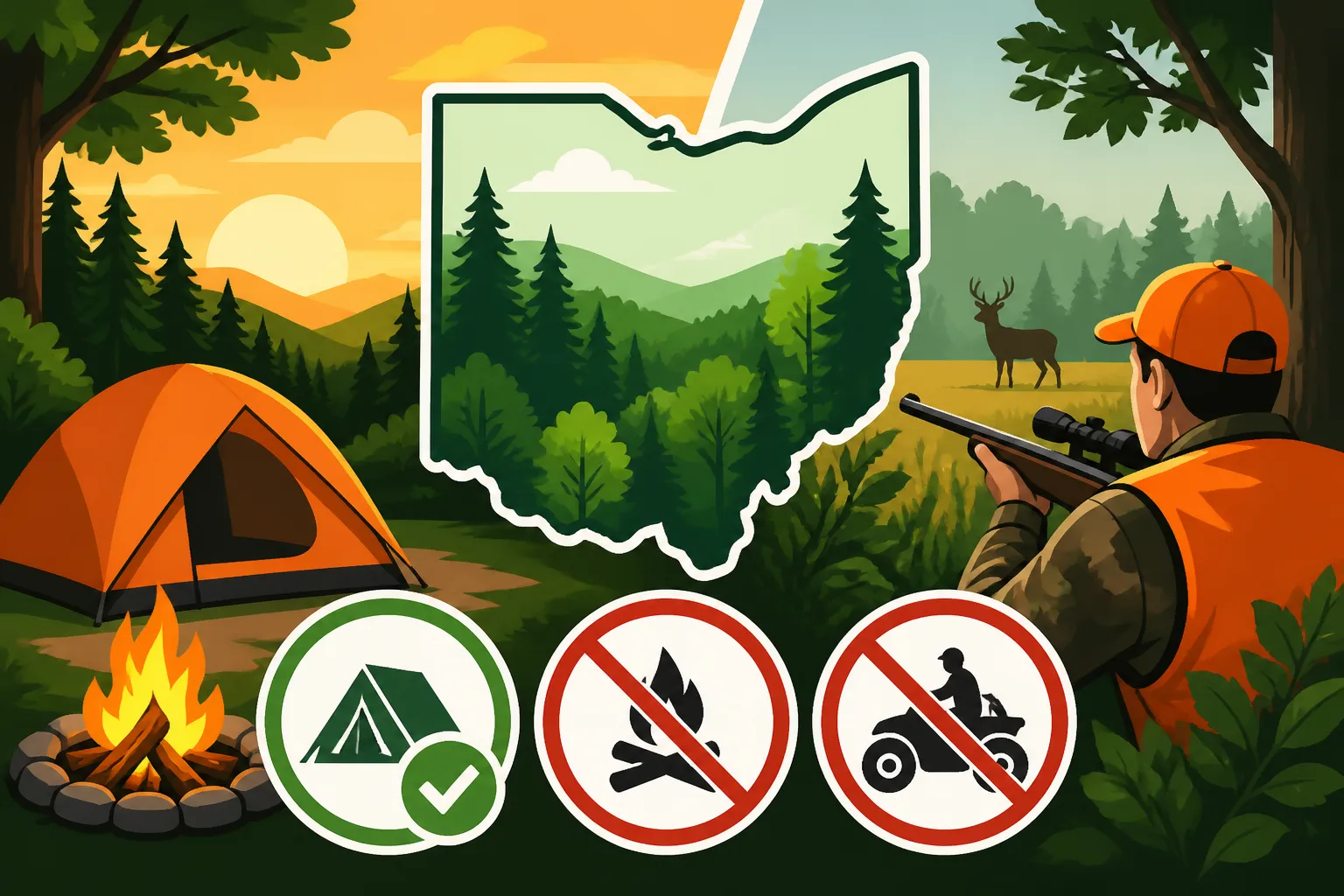
Ah, the campfire – the heart of any good camping trip! But in a state forest, fire safety is paramount. Fires are generally permitted in Ohio State Forests for cooking and warmth, but they must be contained within a designated fire ring or a pit you construct yourself. This isn't the time to get creative with a bonfire; think small, controlled, and safe. Never leave a fire unattended, even for a moment, and always ensure it's completely extinguished, cold to the touch, before you leave your campsite or go to sleep. A single spark can devastate acres of forest, especially during dry periods.
When it comes to firewood, collection rules are strict. You are usually permitted to collect dead and downed wood that is on the forest floor for your campfire. However, cutting standing trees, whether dead or alive, is absolutely forbidden. This rule exists to protect wildlife habitat and the overall health of the forest. If you're packing in firewood, make sure it's local or certified heat-treated to prevent the spread of invasive insects like the Emerald Ash Borer. Bringing in wood from outside the immediate area can introduce pests that are incredibly harmful to Ohio's trees.
Waste Disposal and Leave No Trace Principles
This is perhaps the most critical rule for primitive camping: Pack It In, Pack It Out. Whatever you bring with you to your campsite – food wrappers, cans, bottles, even scraps of fruit or vegetable peels – must leave with you. This isn't just about aesthetics; leaving food waste can attract wildlife, leading to animals becoming habituated to human food, which is unhealthy for them and can create dangerous encounters.
Beyond visible trash, Leave No Trace principles extend to human waste. When camping away from facilities, you'll need to dig a "cathole" at least 6-8 inches deep and 200 feet (about 70 paces) away from water sources, trails, and your campsite. Bury your waste and pack out your toilet paper. This might seem a bit inconvenient, but it's essential for preventing contamination and maintaining a pristine environment for others. Also, avoid using soaps or detergents directly in natural water sources; if you must wash, do so at least 200 feet away from any stream or lake. Your goal is to leave your campsite looking as if no one was ever there.
Duration of Stay and Group Size Limits
While state forests offer a wonderful escape, they aren't meant for permanent residency. Most Ohio State Forests have a maximum duration of stay, typically around 14 days within a 30-day period. This prevents long-term occupation of campsites and ensures fair access for all visitors. If you're planning an extended trip, you'll need to move your camp to a new location outside of that 14-day window.
Group size limits are also common, though they can vary. Generally, a group of 10-12 people is often the maximum for a single primitive campsite. This helps minimize impact on the environment and maintains the quiet, solitary nature of state forest camping. If you have a larger group, consider breaking into smaller units and camping in separate, well-spaced locations, or seek out a designated group camping area if one exists. Always check the specific forest's rules, as these limits are in place to preserve the wilderness experience for everyone.
Planning Your Primitive Camping Experience
Heading into an Ohio State Forest for some primitive camping is an exhilarating experience, but it’s not something you should do on a whim. Proper planning is your best friend when you're going to be off-grid, away from amenities, and often out of cell service. A little preparation goes a long way toward ensuring a safe and enjoyable trip.
Think about the conditions you might encounter – a sudden summer thunderstorm, chilly fall nights, or unexpected navigation challenges. Being prepared for these scenarios will make you feel much more confident and allow you to truly relax and enjoy your time in the woods. This is where tools and knowledge come together to create a seamless adventure.
Scouting Locations and Using Mapping Tools
Before you even pack your tent, a good mapping app like onX Hunt can be invaluable. It'll show you the exact boundaries of state forest land, helping you avoid accidental trespass onto private property. You can also use it to identify potential camping spots away from trails and water, as well as access points. Look for flat, well-drained areas that are naturally cleared, rather than creating new clearings. Using a tool like GoHunt or onX Hunt to pinpoint your desired camping spot on an aerial map can save you a lot of wandering once you're on the ground.
Online resources from the Ohio Department of Natural Resources (ODNR) are also fantastic for scouting. They often provide detailed maps, including topographic features that can help you understand the terrain. Knowing the lay of the land, including water sources and elevation changes, is critical for picking a safe and comfortable spot. Remember, part of the primitive camping experience is the hunt for that perfect, secluded spot, and good scouting makes that hunt much easier. Always download maps for offline use if using a phone app, as cell service can be spotty or non-existent in deeper sections of state forests. Don't forget to pack a physical map and compass as a backup! Scouting Ohio Public Land Before Season is a great article to get more tips on finding good spots.
Essential Gear for State Forest Camping
Given the primitive nature of these sites, you'll need to be entirely self-sufficient. Your gear list should reflect that. Beyond your standard tent, sleeping bag, and sleeping pad, consider these essentials:
- Water filter or purification tablets: Unless you're absolutely certain of a potable water source, you'll need a way to treat natural water.
- Cooking stove and fuel: While fires are allowed, a small stove is often more efficient for cooking and can be used when fire bans are in place.
- First-aid kit: Accidents happen, and you'll be far from immediate medical help. A well-stocked kit is non-negotiable. Check out First Aid Kits for Remote Wayne Forest Ground for detailed suggestions.
- Navigation tools: A reliable GPS unit or a fully charged smartphone with offline maps (like those from
onX Hunt), plus a physical map and compass. - Headlamp or flashlight: For navigating camp after dark.
- Weather-appropriate clothing: Ohio weather can be unpredictable. Layers are always a good idea, even in summer.
- Trash bags: For packing out all your waste.
- Trowel: For digging catholes for human waste.
Think through every scenario and pack accordingly. Being prepared for rain, cold, and unexpected delays will make your trip much more enjoyable.
Safety Considerations and Emergency Planning
Your safety is always the top priority. When camping in remote state forest areas, it's crucial to have a safety plan. Always inform someone reliable back home about your itinerary: where you're going, your planned route, and when you expect to return. Give them a "check-in" time, and if they don't hear from you, they know to initiate a search.
Be aware of wildlife in the area. While dangerous encounters are rare, knowing how to store food properly (in bear-resistant containers or hung from a tree) can prevent unwelcome visitors. Be mindful of hunting seasons if you're not there to hunt yourself; wearing blaze orange during deer gun season is mandatory for non-hunters as well as hunters. Understanding Ohio Blaze Orange Requirements is vital for your safety. Also, keep an eye on weather forecasts and be prepared to shelter or evacuate if severe weather is predicted. Having a fully charged power bank for your phone, even if there's no service, can be useful for emergencies if you can reach a signal or for accessing downloaded maps.
State Forest Camping Versus Other Public Lands
Ohio offers a diverse array of public lands, each with its own set of rules and expectations for campers. Understanding these distinctions is key to a hassle-free outdoor experience. While State Forests are generally for primitive, dispersed camping, other lands like Wildlife Areas and State Parks have different regulations. Confusing them could lead to fines or a ruined trip.
It’s easy to assume all "public land" means the same thing, but this simply isn't true. Each managing agency has specific mandates and goals, which dictate how recreation, including camping, is handled. Knowing these differences will help you choose the right location for your specific camping style.
Differences from Ohio Wildlife Areas
Ohio Wildlife Areas (OWAs) are primarily managed by the ODNR Division of Wildlife with a strong focus on wildlife habitat and hunting. While some OWAs permit camping, it's often more restricted than in State Forests. Camping on Wildlife Areas might be allowed only in specific, designated primitive sites, and sometimes only during certain hunting seasons. Dispersed camping, where you just set up anywhere, is typically not allowed on Wildlife Areas.
Many OWAs have specific rules regarding vehicle access, off-road travel, and even temporary structures, all geared towards preserving critical habitat. If you're looking to combine Ohio State Forest Hunting with camping, you'll find more flexibility in State Forests. For OWAs, it's critical to check the individual area's regulations on the ODNR website or by contacting the local wildlife office. A quick call can save you a lot of grief. Don't just assume what applies to a State Forest applies to an OWA; they are distinct.
Differences from Ohio State Parks
Ohio State Parks are the most developed public land areas, often featuring modern campgrounds with amenities like electric hookups, flush toilets, showers, and even laundromats. These campgrounds require reservations, often well in advance, and come with a nightly fee. Dispersed or primitive camping is generally not permitted within the boundaries of an Ohio State Park, except for specific backpacker camps along designated trails, which still usually require a permit or fee.
State Parks are designed for a more comfortable, family-friendly camping experience with easy access to attractions and services. The rules are much more structured: quiet hours, pet restrictions in certain areas, and clearly marked campsites are the norm. If you're looking for a quiet, solitary wilderness experience, a State Forest is likely a better fit. If you want convenience, amenities, and easy access, a State Park campground is probably what you're after. The key takeaway is: primitive, unpermitted camping is almost exclusively a State Forest offering.
| Feature | Ohio State Forest (Dispersed) | Ohio Wildlife Area (OWA) | Ohio State Park (Campground) |
|---|---|---|---|
| Camping Type | Primitive, Dispersed | Designated Primitive Sites (Limited) | Developed, Modern (Reservations) |
| Permit/Fee | Generally No (Dispersed) | Often Required for Designated Sites | Yes, Required for All Sites |
| Amenities | None (Self-sufficient) | Very Basic (Vault Toilet, Water) | Full (Electric, Water, Showers, etc.) |
| Reservations | No (First-come, first-served) | Sometimes for Designated Sites | Yes, Often Required |
| Primary Use Focus | Timber, Recreation, Hunting | Wildlife Habitat, Hunting | Recreation, Tourism |
| Firewood | Dead/Downed Wood on Ground Permitted | Check Specific OWA Rules | Often Sold/Must Be Certified HT |
| Duration of Stay | ~14 days / 30-day period | Check Specific OWA Rules | Limited to Reservation Length |
Understanding these differences is crucial for planning your trip. Using tools like the Ohio HuntFish App or checking the official ODNR websites for specific locations will help you ensure you're compliant with all regulations, no matter where you choose to set up camp. Always verify the rules for the specific area you plan to visit, as they are subject to change.
Disclaimer
This article is for general informational purposes only and does not constitute professional advice. Laws, prices and regulations vary by location and change over time. Consult a qualified professional for guidance on your specific situation.