Ohio Whitetail Color Phase Rarities
Stepping into the woods, most Ohio hunters expect to see a symphony of browns and grays – the classic camouflage of our whitetail deer herd. But every so often, nature throws a truly wild curveball, and you spot something that makes you blink, rub your eyes, and then frantically reach for your binoculars or phone to snap a photo. These aren't just deer with a slightly different shade of hide; these are true color phase rarities, genetic anomalies that result in whitetails sporting coats far from the norm. This guide will dive deep into what these incredible deer are, why they appear, and what it means when you're lucky enough to encounter one in the Buckeye State.
Beyond the Typical Brown: Understanding Whitetail Coloration
It’s easy to take for granted the familiar look of a whitetail. We see hundreds, even thousands, over our hunting careers, and they all blend into that recognizable palette. But understanding why they usually look the way they do helps us appreciate the rare instances when they don’t.
The Standard Whitetail Palette: Why Most Deer Look Alike
Our typical Ohio whitetail deer exhibits a fairly consistent coloration, a result of millions of years of evolution designed for optimal camouflage within their natural habitat. In summer, you'll generally see a reddish-brown coat, often referred to as their "summer pelage." This lighter, often coarser hair helps them blend in with the lush green foliage and sun-dappled woods. As the days shorten and temperatures drop, they transition to a thicker, grayer, and often longer winter coat, or "winter pelage." This denser insulation is vital for surviving cold Ohio winters and also provides excellent camouflage against the bare trees, muted undergrowth, and occasional snow.
This standard coloration is primarily dictated by melanin, the natural pigment that gives skin, hair, and eyes their color. Eumelanin produces black and brown pigments, while pheomelanin produces red and yellow. The balance and distribution of these pigments are determined by a complex interplay of genes inherited from both parents. While there might be subtle regional variations – perhaps a slightly darker deer in a heavily wooded, shaded ravine compared to one thriving in the sun-drenched edges of Hunting Northwest Ohio Farmland Deer – the vast majority of our White-Tailed Deer Across Ohio adhere to this standard, successful coloration. It's a testament to how finely tuned these animals are to their environment.
What Exactly is a "Color Phase Rarity"?
A "color phase rarity" isn't just a deer that looks a little lighter or darker than its buddies. Instead, it refers to a distinct, genetically driven deviation from the species' typical coloration, caused by specific mutations that affect the production or distribution of melanin. These mutations aren't about adapting to an environment; they're essentially genetic quirks that pop up occasionally within a population. Imagine a perfect recipe for deer color, passed down through generations. A color phase rarity is when one small, but crucial, ingredient is either missing, overabundant, or altered, leading to a drastically different outcome.
These aren't typically signs of illness or poor health, although some conditions associated with these rarities can lead to other vulnerabilities. They're just a fascinating glimpse into the genetic diversity, even if expressed in an unusual way. Encountering one of these deer is incredibly special because they are so uncommon within the broader Ohio Deer Population Estimate, making them a true marvel for any hunter or wildlife observer.
The Uncommon Shades: Albino, Leucistic, and Melanistic Deer
While the brown deer is king, there are a few other, much rarer, kings and queens that wear dramatically different robes. These are the truly unique individuals that might leave you wondering if your eyes are playing tricks on you.
The Ghost of the Forest: Albino Whitetails
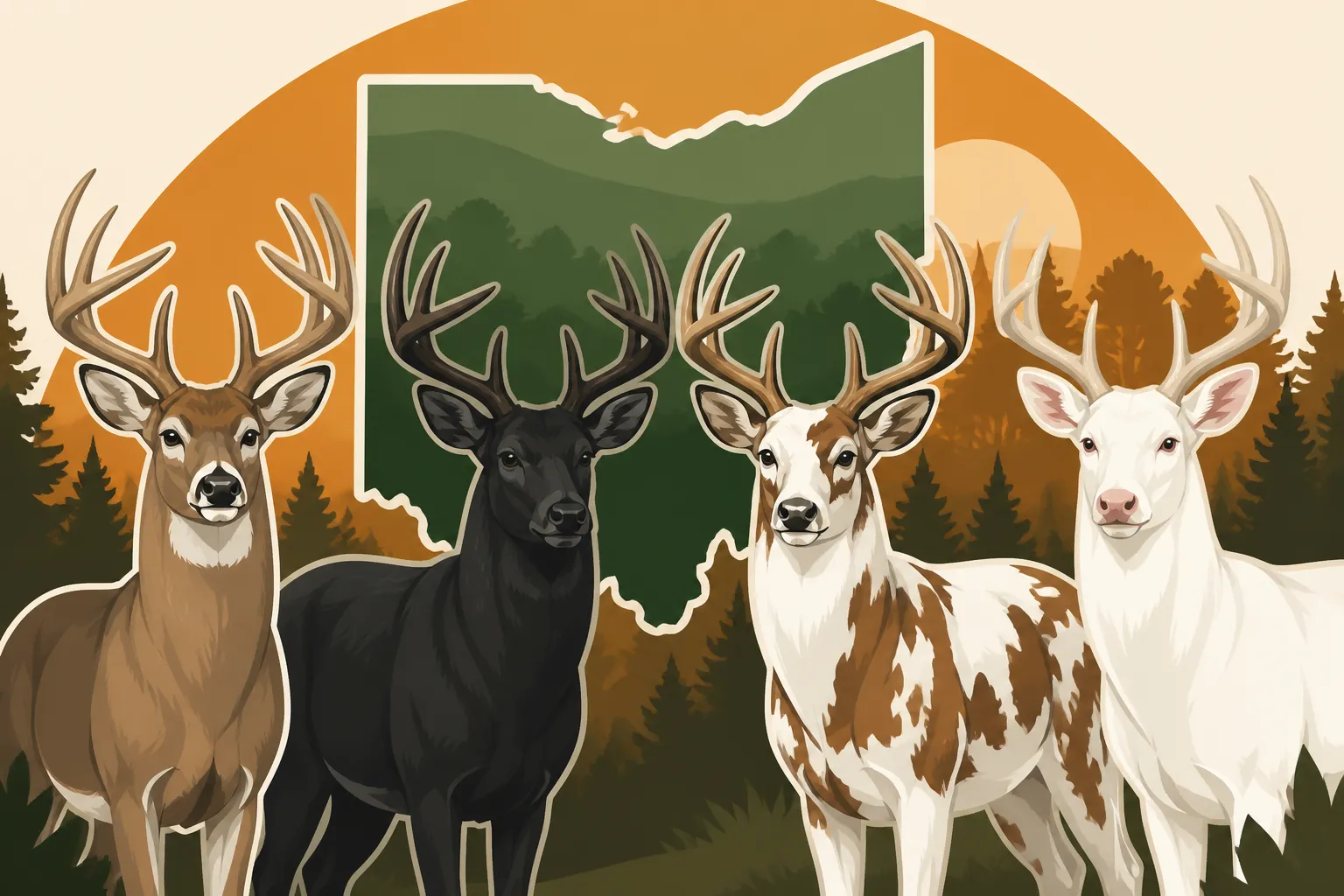
Perhaps the most famous and easily recognizable of the color phase rarities is the albino whitetail. When you spot an albino deer, there's no mistaking it: it’s pure, pristine white, almost glowing against the backdrop of the forest. But the defining characteristic that truly separates an albino from other white deer is its complete lack of all pigment. This means not only white hair, but critically, pink or reddish eyes. You'll also notice a pink nose and pale, often pinkish hooves. This striking appearance is caused by a genetic mutation resulting in the inability to produce any melanin whatsoever. It's a recessive genetic trait, meaning a deer must inherit the gene from both parents to express albinism.
Unfortunately, this dazzling appearance often comes with significant challenges. The lack of camouflage makes them highly conspicuous to predators, both human and animal, significantly reducing their chances of survival to adulthood. The pink eyes, which are due to the blood vessels showing through the unpigmented iris, are often highly sensitive to sunlight, potentially impairing their vision during the day. While reports of albino deer do surface periodically across Ohio, they remain exceedingly uncommon, true once-in-a-lifetime sightings for most. Biologists using tools like those found on GoHunt might track sightings, but their fleeting nature makes comprehensive data hard to gather. These magnificent, ghostly deer are a powerful reminder of nature’s unpredictable beauty.
The Partial Fade: Leucistic Whitetails
Often confused with albinos, leucistic whitetails are another stunning, though perhaps slightly less rare, color phase. The key difference lies in the degree of pigment loss. While an albino has a complete absence of melanin, a leucistic deer has only a partial reduction. This means a leucistic deer will also have mostly white hair, sometimes with patches of its normal brown or gray coloration still visible. However, unlike albinos, leucistic deer retain their normal eye color, which will typically be brown or blue, and will also have a dark nose and dark hooves. This is because the genetic mutation affecting them interferes with pigment cells only in certain areas, or prevents them from fully developing, but doesn't impact eye pigment production in the same way as albinism.
Leucism is also typically a recessive trait, though the specific genes involved are different from those causing albinism. Because they retain some pigment in their eyes and often have some degree of normal coloration, their survival rate might be slightly better than that of an albino, as their vision isn't as compromised, and their camouflage isn't quite as starkly contrasted. You might be more likely to hear reports of leucistic deer sightings in Ohio than true albinos, though they are still very rare. Hunters often post pictures of these unique deer online, and sometimes these end up on platforms where you can share and analyze sightings, such as those available through GoHunt. It's truly a sight to behold when you catch a glimpse of one, like a brushstroke missing from nature's canvas.
The Shadow Deer: Melanistic Whitetails
Now, if albino and leucistic deer are about less pigment, melanistic deer are about more. These are the "shadow deer," animals that exhibit an excess of melanin, resulting in an unusually dark or even jet-black coat. Imagine the typical brownish-gray whitetail, and then darken it significantly, sometimes to the point where it looks like a completely different species. The coat can range from a very deep, rich chocolate brown to an almost solid, glossy black. Their eyes, nose, and hooves will be a normal, dark color, sometimes appearing even darker due to the surrounding excess pigment.
Melanism in whitetails is arguably even rarer than albinism, and certainly less commonly reported across most of their range. Its genetic basis is often a dominant trait, though it's not as well understood as the recessive genes behind albinism and leucism. Historically, there have been a few known geographic "hotspots" for melanistic deer, particularly in certain regions of Texas and some parts of Michigan, but these concentrations are very localized. In Ohio, a truly melanistic whitetail sighting would be an extraordinary event, something a hunter might experience only once in a lifetime – if at all. While their dark coat might provide better camouflage in very dense, shaded timber or at night, it makes them stand out dramatically in open fields or snowy landscapes. For the avid hunter who utilizes scouting tools or checks How ODNR Counts Ohio's Deer Herd, spotting a melanistic deer would be a truly noteworthy addition to their observations, a powerful reminder of the diversity hiding within our deer populations.
| Color Phase | Primary Hair Color | Eye Color | Nose/Hooves | Pigment Level | Genetic Basis | Ohio Rarity |
|---|---|---|---|---|---|---|
| Albino | Pure White | Pink/Red | Pink | Complete Absence | Recessive (specific gene) | Extremely Rare |
| Leucistic | White (may have patches) | Normal (Brown/Blue) | Normal (Dark) | Partial Absence | Recessive (diff. gene) | Very Rare |
| Melanistic | Dark Brown to Black | Normal (Brown) | Normal (Dark) | Excess Pigment | Often Dominant | Exceedingly Rare |
Encountering a Rare Whitetail: Ethics and Observation
Spotting one of these unique deer can be a moment of pure awe, and it often brings up questions for hunters. What do you do if you're fortunate enough to have one walk into your shooting lane?
To Harvest or Not to Harvest? Ethical Considerations
When an albino, leucistic, or melanistic deer steps out, the first thing many hunters wonder is, "Can I even shoot that?" In Ohio, generally speaking, there are no specific statewide regulations that protect deer based solely on their color phase. If the deer is legal based on sex, antler restrictions (if any for that season/permit), and you hold the appropriate Ohio Deer Season Structure Explained license and tags, it is typically legal to harvest. However, this is where personal ethics and individual choice truly come into play.
Many hunters, upon encountering such a rare animal, choose to let it walk. They view these deer as a natural trophy of rarity, something to be observed and appreciated rather than harvested. They might argue that the genetic uniqueness makes the animal more valuable alive, for future generations to potentially witness, or simply because it’s a living marvel. Others might see it as just another deer, a product of nature’s lottery, and if it presents a shot opportunity and fills a tag, they would harvest it. There's no single "right" answer here, and the decision often weighs heavily on the individual hunter's conscience and values. What’s important is making an informed decision that aligns with your personal hunting ethics, perhaps after considering the animal's contribution to the local ecosystem and the sheer wonder of its existence. Just be sure you're always using Ohio Legal Firearms for Deer Hunting and following all other regulations.
Documenting Your Sighting: Beyond the Shot
Whether you decide to harvest a rare color phase deer or let it pass, documenting the encounter is incredibly valuable. In today's world of smartphones and trail cameras, getting a clear photo or video is often easier than ever. These images can serve not only as a personal memento of an extraordinary experience but also contribute to a broader understanding of wildlife. While wildlife agencies don't formally track every sighting of these rarities, having photographic evidence can sometimes help biologists confirm the presence of these genetic traits within a local population.
Imagine capturing footage of a melanistic buck on your trail camera. Sharing that on online forums or social media, especially platforms where hunters and wildlife enthusiasts connect like those affiliated with GoHunt, can spark conversations and educate others about these unique animals. It’s a way to contribute to the collective knowledge of our natural world, celebrating the diversity within our beloved Ohio Deer Harvest Records. Sometimes, the best "trophy" isn't what you take home, but the story you bring back and the knowledge you share.
The Impact on Local Deer Populations
For the most part, these color phase rarities have a negligible impact on the overall health or genetic integrity of Ohio's deer population. They are isolated occurrences, often due to recessive genes, meaning they typically don't spread widely through a herd. A small percentage of deer carrying these genes will never visibly express them, maintaining the diversity within the gene pool without causing widespread changes in appearance.
It's crucial to understand that these are natural variations, not necessarily indicators of disease or a problem within the herd. Unlike concerns about Ohio Wildlife Disease Monitoring, which can significantly affect population health, a uniquely colored deer is generally just that: unique. While an albino's reduced survival due to lack of camouflage can be a factor for that individual, it rarely affects the broader population dynamics or the overall Ohio Deer Antler Growth Timeline of the herd. These deer are simply a fascinating testament to the vast genetic possibilities inherent in nature, a biological lottery ticket drawn perhaps once in a thousand. They are a wonder to behold and a reminder that even in the familiar world of whitetails, there's always something new and incredible to discover.
Disclaimer
This article is for general informational purposes only and does not constitute professional advice. Laws, prices and regulations vary by location and change over time. Consult a qualified professional for guidance on your specific situation.