Dragging a Deer Off a Steep Ridge
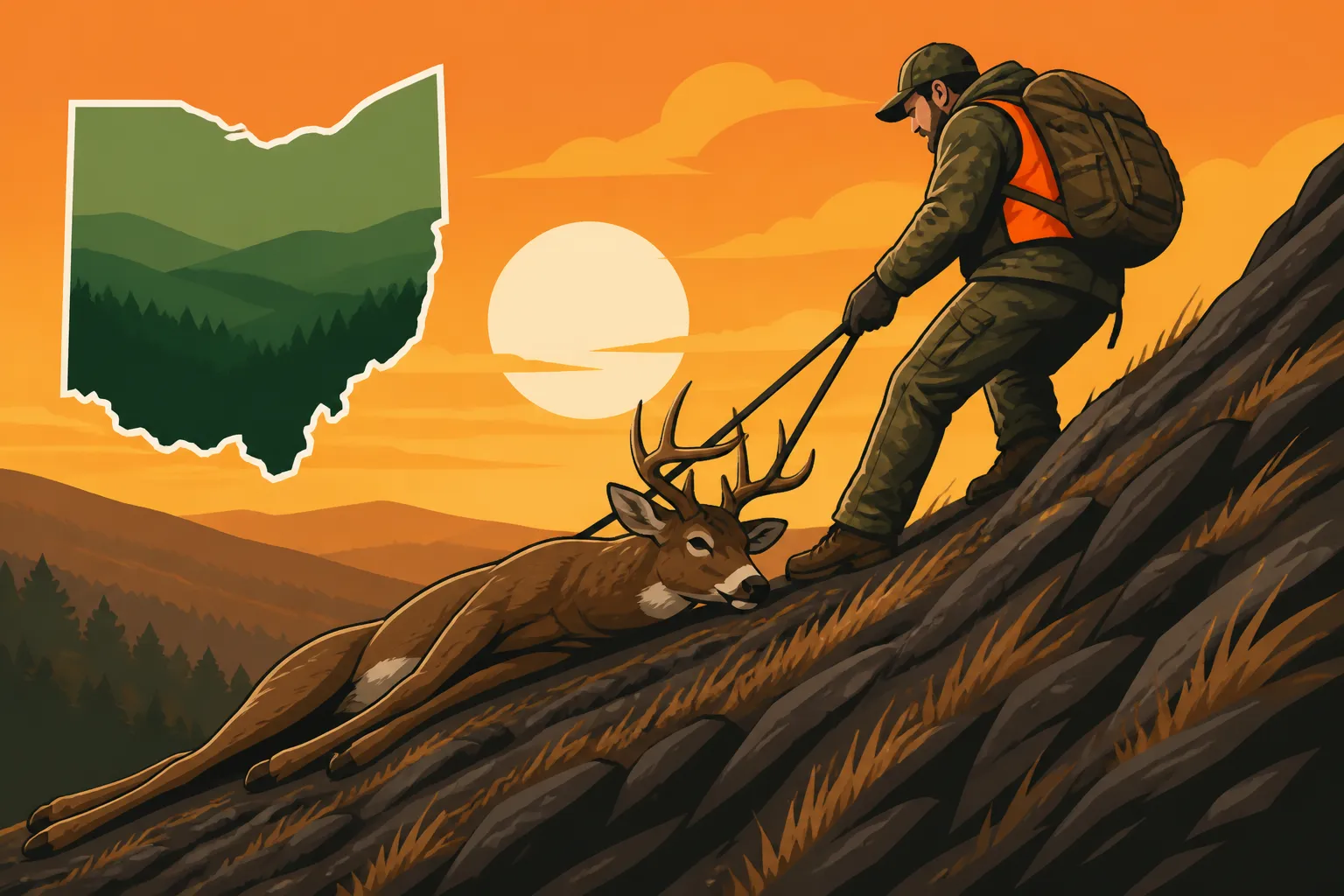
You’ve done it. The shot was perfect, the buck dropped clean, and the adrenaline is still coursing through your veins. But then you look around, and the reality sinks in: that beautiful animal is lying at the bottom of a steep ravine or halfway up a gnarly ridge in the middle of nowhere. Getting a deer out of Ohio's rugged, hilly terrain can quickly turn a triumphant moment into a grueling, sometimes dangerous, ordeal. This guide is all about equipping you with the knowledge, gear, and strategies to safely and efficiently recover your deer, even when gravity seems to be working against you.
The Harsh Reality of Ridge Country Recoveries
There's a special kind of exhaustion that only comes from dragging a deer through thickets and over fallen timber, especially when the ground underfoot is constantly trying to send you tumbling. Ohio's diverse landscape, particularly the Appalachian foothills of the southeast, presents unique challenges that can quickly humble even the most experienced hunter. It’s one thing to drop a deer in a flat cornfield, but quite another to retrieve one from a steep, rock-strewn hillside in the Wayne National Forest.
Why Steep Ridges Are the Toughest Challenge
Ohio's ridge country, stretching across counties like Scioto, Adams, and Hocking, is beautiful, but it's also unforgiving when you're trying to move a couple hundred pounds of dead weight. You're not just fighting the weight of the deer; you're battling gravity, loose leaf litter that offers no traction, thorny briar patches that snag everything, and the constant threat of slipping on wet rocks or muddy slopes. Many of these ridges are laced with deep ravines and drainages, requiring you to navigate down one side and back up another, sometimes repeatedly. It's a leg, lung, and back workout that nobody trains for specifically, but everyone wishes they had when the moment comes. The mental fortitude required to push through the exhaustion, knowing every step is a struggle, is as important as physical strength.
The Importance of Planning and Preparation
The best way to tackle a tough deer recovery is to be prepared before you even step foot in the woods. This starts with proper scouting. Before the season, spend time studying maps and aerial imagery, ideally using a robust mapping app like those offered by GoHunt. Identify potential bedding areas, food sources, and travel corridors, but also pay close attention to the topography. Look for the path of least resistance – a saddle, a gradual slope, or an old logging road that might provide an easier exit route.
Consider your approach to your stand or hunting area. If you’re deep in the Appalachian hills, think about how you would get a deer out from that specific spot. Having a mental "exit strategy" for various scenarios can save you immense time and energy later. When you're Scouting Ohio Public Land Before Season, make a note of old ATV trails, dry creek beds, or even game trails that run along contours rather than straight up and down. Remember, every ounce of prevention in planning is worth a pound of cure during the actual drag.
Essential Gear for a Successful Ridge Drag
Nobody wants to be caught flat-footed after a successful hunt, especially when facing a challenging recovery. Having the right tools on hand can make the difference between a relatively smooth extraction and an hours-long nightmare. Don't skimp on these items; they're an investment in your safety and efficiency.
The Right Deer Dragging Aids
Forget just grabbing the deer by the antlers and pulling; that's a recipe for a bad back and shredded hands. Modern dragging aids are designed to distribute weight, reduce friction, and give you better leverage.
- Deer Sleds: These are arguably the most valuable tool for ridge country. Brands like Shappell (Jet Sled) or smaller, specialized models are fantastic. They create a smooth, low-friction surface that allows the deer to slide over rough terrain, reducing the effort needed by a significant margin. They protect the hide from abrasions and keep dirt and debris off the meat. Look for models with sturdy tow ropes or even optional harnesses. When you’re Dragging a Deer Off a Steep Ridge, a good sled is a game-changer, especially on snowy or muddy ground where it can glide like it's on rails.
- Heavy-Duty Ropes and Straps: A strong, long rope (20-30 feet) is indispensable. You can loop it around the deer's neck and chest, or use it with a sled. If you have a partner, a rope allows both of you to pull together. For extremely steep sections, you can even use a rope to lower the deer in a controlled manner, snubbing it around a tree for friction. Look for robust nylon or polypropylene ropes that won't fray easily.
- Shoulder Harnesses: Instead of just pulling with your arms, a shoulder or chest harness allows you to use your entire body weight and leg strength. This saves your arms and back from immense strain. Many sleds come with a basic harness, or you can purchase heavy-duty ones separately. This leverage can be the difference between completing the drag and having to make multiple trips or calls for help.
Essential Personal Gear for the Task
Beyond the dragging aids, certain personal items will enhance your safety and comfort during the arduous process.
- Gloves: Heavy-duty work gloves are non-negotiable. They protect your hands from rope burn, thorns, sharp sticks, and the general grime of the woods. Choose gloves that offer good grip and durability.
- Water and Snacks: This might seem obvious, but many hunters forget it in the excitement. Dragging a deer, especially in warmer early archery season conditions, is incredibly dehydrating. Carry more water than you think you’ll need. High-energy snacks like granola bars or jerky will keep your fuel tank from running empty. Remember, a long drag can sometimes take hours, akin to a serious hike.
- First Aid Kit: Slips, falls, cuts, and scrapes are common when navigating rough terrain. A compact First Aid Kits for Remote Wayne Forest Ground should always be in your pack. It’s better to have it and not need it than the other way around.
- Headlamp: Even if you drop a deer in daylight, a tough recovery can stretch into the evening. A reliable headlamp (with extra batteries!) is crucial for hands-free illumination once the sun dips below the ridges.
Thinking Beyond the Drag: Carts and Haulers
Once you’ve wrestled the deer off the steepest, nastiest part of the ridge and onto more manageable terrain – perhaps an old logging road or a flatter section of a wildlife area – a deer cart can become your best friend.
- Deer Carts: These two-wheeled wonders excel on relatively flat or gently sloping ground, especially if the path is clear of major obstacles. They elevate the deer, making it much easier to move. While not suitable for the initial, truly steep descent, having one stashed at a designated pickup point or readily accessible can save your back the last few hundred yards. Look for models with large, sturdy wheels and a robust frame. Many hunters will stage their carts where the real "ridge-pull" ends, transforming a potential long, miserable drag into a much more manageable roll.
- ATV/UTV Access: In some areas, particularly on private land or certain public land sections with designated roads, you might have the luxury of ATV or UTV access. Always confirm rules and regulations before planning this, especially on public land. Tools like GoHunt can help you identify areas with potential vehicle access, which can drastically cut down on recovery time. However, never rely on it as your primary method if you're hunting deep in areas like the Zaleski State Forest where vehicle access is severely limited.
Here’s a quick comparison of common dragging aids:
| Dragging Aid | Best Use Case | Pros | Cons |
|---|---|---|---|
| Deer Sled | Steep, rough, or snowy terrain; solo or small groups | Reduces friction; protects hide; versatile for varied terrain | Can be bulky to carry in; still requires significant pulling |
| Shoulder Harness | Any drag where maximizing body strength is needed | Saves arms and back; uses leg power; leaves hands free | Requires pairing with a rope/sled; can be uncomfortable if ill-fitting |
| Heavy-Duty Rope | Controlled lowering on extreme slopes; shared pulling | Simple, lightweight; good for solo or multiple pullers | High friction on deer hide; can cause rope burn; less efficient than sled |
| Deer Cart | Flat to gently rolling terrain; clear paths | Easiest for long distances on good ground; less physical strain | Impractical on steep, rocky, or heavily obstructed terrain; bulky |
| Game Carrier/Pack | Quartered deer; extremely rugged terrain; solo hunter | Distributes weight on back; allows hands-free movement | Requires quartering/boning the deer in the field |
Strategies and Techniques for Minimizing Strain
Getting a deer off a steep ridge is a physical and mental game. Employing smart strategies can make the seemingly impossible task achievable, whether you’re hunting solo or with a group.
Solo Techniques for Steep Descents
Hunting alone, as many Ohio bowhunters do, means you're solely responsible for the recovery. This is where technique really shines.
- Use Gravity, But Control It: On steep slopes, let gravity do some of the work, but maintain control. Position the deer so it slides feet-first, which helps prevent the antlers from digging in. Use a rope wrapped around the deer’s chest/shoulders, and carefully lower it while bracing yourself against a tree or using a zig-zag path to control speed. Never let the deer get ahead of you and out of control; it can lead to dangerous tumbles for both of you.
- Zig-Zagging (Switchbacks): Instead of pulling straight down the fall line, which is incredibly difficult and dangerous, traverse the slope in a zig-zag pattern. This significantly reduces the effective grade you're pulling against, similar to how a trail winds up a mountain. It takes longer but is far less taxing and safer.
- Controlled Slides: If the terrain is relatively smooth but steep, a deer sled really shines here. You can almost "ski" the sled down, keeping your body uphill of the deer for control. Always watch for obstacles like stumps or large rocks that could snag the sled or send the deer veering off course.
- "Winched" Lowering: For really extreme drops, if you have a sturdy rope, you can secure one end to a strong tree at the top of the slope and then use the rope to slowly lower the deer. You'll need to feed the rope through your hands (with heavy gloves!) or around another tree for friction to control the descent. This method is best used with a partner, but can be done solo with extreme caution.
Team Effort: Leveraging Manpower
If you're fortunate enough to have hunting buddies, a team effort can turn a daunting drag into a manageable one. Coordination is key.
- The Relay System: For long, tough drags, don't try to pull the whole way without a break. Set up a relay. One or two people pull for a set distance (e.g., 50 yards), then switch with others. This keeps everyone fresher and maintains morale.
- Front and Back Pullers: With two people, one can pull from the head or chest, while the other pushes or helps guide from the rear, especially on turns or over obstacles. On a very steep descent, having someone control the rear can prevent the deer from rolling.
- The "Human Winch": With several people, you can create a human chain. One person pulls directly on the deer, and another person pulls on that person’s harness or a rope attached to them, and so on. This multiplies pulling power, but requires clear communication.
- Staging Gear: One person can focus on carrying additional gear, such as a large pack with extra water, snacks, or even a chainsaw for clearing large downed timber, while others focus on the deer itself. This is particularly useful when hunting big woods in areas like the Wayne National Forest Hunting.
Navigating Obstacles and Ravines
Ohio's woodlands are rarely a clear shot. You'll inevitably encounter fallen timber, thick brush, and those pesky ravines.
- Over Logs and Through Brush: When encountering logs, try to position the deer (or sled) perpendicular to the log and lever it over. If the log is too big, look for a lower section or a break in the timber. For dense brush, it’s often easier to go around it than to drag through it, even if it means a slightly longer route. This is where that pre-scouting with a tool like GoHunt or your GPS Units Versus Phone Apps comes in handy for route adjustments on the fly.
- Creek Crossings and Ravines: These are perhaps the trickiest obstacles. Look for the narrowest or shallowest part of a creek, or a section with a firm bank. If the ravine has steep sides, consider using a controlled lower on one side and a coordinated pull up the other. If water is involved, be prepared to get wet, and ensure your boots have good traction (think Boots for Ohio Mud and Snow). Some hunters will even carry a small, folding saw to quickly clear a path through smaller saplings or branches if absolutely necessary.
Post-Drag Care and Considerations
You've done the hard part – the deer is off the ridge and at your vehicle. But the job isn't quite over. Taking care of the deer (and yourself) immediately afterward is crucial for meat quality and your own well-being.
Field Dressing and Initial Care on the Ridge
To lighten the load, many hunters choose to field dress their deer on the spot, before the drag even begins. This removes a significant amount of weight (blood, viscera) and helps cool the carcass quicker, especially important during warmer early season hunts.
- Gutting in the Field: If you're confident in your field dressing skills, doing it where the deer drops is highly recommended. Make sure you have a sharp knife and plenty of disposable gloves. You can remove all the internal organs, which can reduce the deer's weight by 20-30%. If you're on public land, bury the guts well away from trails.
- "Gutless" Method: For truly remote or steep areas, or for hunters who prefer to process at home, the "gutless" method involves skinning and quartering the deer in the field, then packing out the meat in game bags. This is often the most practical approach when recovering a deer from the absolute deepest sections of places like Shawnee State Forest. While more involved, it allows you to carry manageable loads, potentially in a frame pack, which is far easier than dragging a whole deer up and down mountains. Make sure to carry proper Game Bags for Early Archery if you plan this.
- Cooling the Carcass: After field dressing, try to prop the body cavity open with a stick or two to allow air to circulate and cool the meat. If temperatures are warm, this is vital to prevent spoilage. You can even place ice packs in the cavity if you have them readily available at the bottom of the ridge.
Hydration and Recovery Post-Drag
Don't underestimate the physical toll of dragging a deer. Your body will be exhausted and dehydrated.
- Rehydrate Immediately: As soon as you're done, drink plenty of water or an electrolyte drink. You've likely sweated out a lot, and replenishing fluids is essential to prevent cramping and fatigue.
- Stretch and Rest: Take a few minutes to stretch out your back, legs, and shoulders. Your muscles will thank you later. Don't rush into driving home or other activities. Allow your body a moment to recover.
- Check for Injuries: Give yourself a once-over for any scrapes, thorns, or other minor injuries you might have sustained during the drag. Address them promptly from your First Aid Kits for Remote Wayne Forest Ground before they become bigger issues.
- Process Your Deer Promptly: Once the deer is at your vehicle, get it to a cooler or processor as quickly as possible. Don’t let all that hard work go to waste by letting the meat spoil. If it’s cold, you might have a bit more time, but if it’s warm, prioritize getting it to a cool place. Even with Field Dressing a Deer in Cold Weather, getting it cooled is paramount.
Retrieving a deer from a steep Ohio ridge is one of hunting's great challenges, but with the right mindset, preparation, and gear, it’s a challenge you can meet. Remember, safety first, and don't be afraid to ask for help if you need it. There's no shame in a team effort when the reward is a freezer full of venison earned through sweat and perseverance.
Disclaimer
The information provided in this guide is for informational purposes only. Hunting regulations, safety protocols, and best practices can change. Always consult the latest Ohio Department of Natural Resources (ODNR) regulations and guidelines before heading afield. Hunting involves inherent risks, and personal safety should always be your top priority.