.44 Magnum Rifle for Ohio Deer
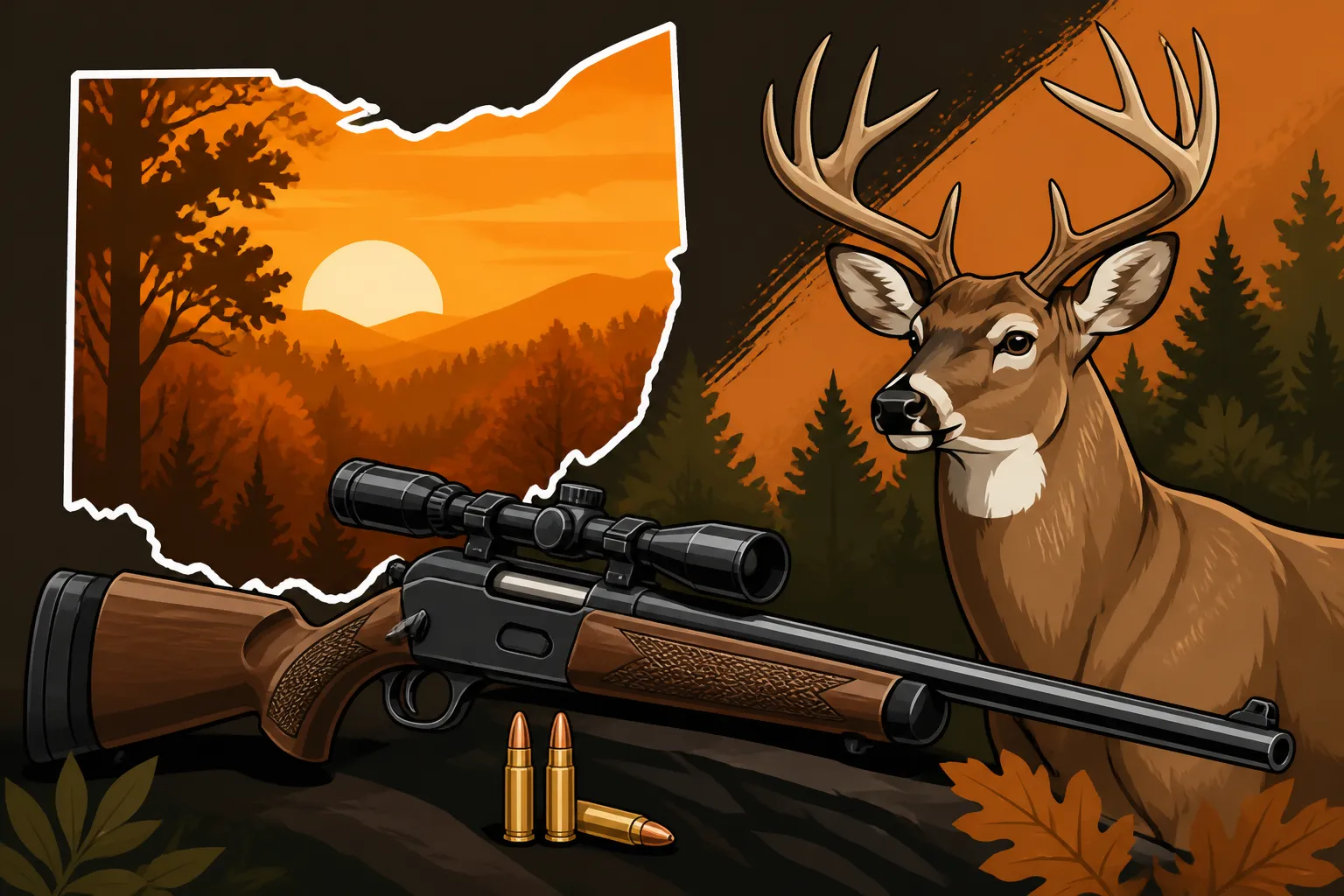
Trying to decide if that trusty .44 Magnum lever-action or bolt-action rifle you love is truly up to the task for Ohio's whitetails can feel like a big decision, especially with all the talk about straight-wall cartridges. Many hunters grew up hearing about shotgun-only zones, and now with more options, it's easy to wonder if your preferred firearm is still a top-tier choice. This guide will dive deep into the .44 Magnum rifle, exploring its effectiveness, ideal scenarios, and what you need to know to make it a successful deer getter in the Buckeye State.
The Enduring Appeal of the .44 Magnum Rifle in Ohio
For many Ohio hunters, the .44 Magnum rifle holds a special place, a bridge between the traditional shotgun slug and the newer, high-velocity straight-wall cartridges that have entered the scene. Before straight-wall centerfire rifles were broadly permitted, the .44 Magnum in a carbine or rifle was a popular option in some states that restricted bottleneck cartridges, offering more range and accuracy than most shotguns while still adhering to the "straight-walled" projectile concept. Now, with Ohio's current regulations, it fits right in, providing a familiar and often very effective platform for deer hunting.
This cartridge carved out its niche because of its substantial bullet diameter and respectable energy at moderate ranges. It's not a long-range magnum by any stretch of the imagination, but for the typical Ohio hunting scenario—dense timber, brushy fencerows, and relatively short shooting lanes—it often excels. Its heavy, large-diameter bullets deliver a powerful punch, making it a reliable choice for cleanly taking whitetails.
While newer straight-wall contenders like the .350 Legend or .450 Bushmaster have gained significant traction, the .44 Magnum maintains a loyal following, often due to its lighter recoil, the classic feel of lever-action rifles chambered for it, and the sheer nostalgia factor. Many hunters already own one, perhaps passed down through generations, and are keen to continue using a rifle they know and trust. It's a cartridge that has proven itself in the field countless times, and its capabilities are well-understood by those who embrace its strengths.
Understanding the .44 Magnum's Strengths and Limitations
Every cartridge has its sweet spot, and the .44 Magnum is no exception. While it’s certainly capable, understanding where it truly shines and where its performance might taper off is key to ethical and successful hunting. This isn't a long-range mountain cartridge, but for the vast majority of Ohio deer hunting, its characteristics are actually quite beneficial.
Effective Range for Deer Hunting
The .44 Magnum rifle, particularly when firing typical deer hunting loads, is generally considered effective out to about 125-150 yards for whitetail deer. Beyond that range, bullet drop becomes more pronounced, and kinetic energy, while still sufficient, starts to dip significantly. For example, a common 240-grain .44 Magnum bullet zeroed at 100 yards might drop 6-8 inches at 150 yards and over a foot at 200 yards, depending on the specific load and barrel length. This requires hunters to be very conscious of their range and bullet trajectory, especially in open field scenarios.
However, consider the typical Ohio hunting environment. Many hunters are sitting in a treestand overlooking a small food plot, a timber edge, or a creek bottom. Shots often occur at 75 yards or less. In these situations, the .44 Magnum is absolutely devastating. It delivers plenty of energy to cleanly dispatch a deer, and its trajectory is relatively flat within these closer confines. This makes it an excellent choice for hunting thick cover where shots are almost always at close to moderate distances, such as when Still-Hunting Shawnee State Forest Ridges or sitting over a secluded clearing. For those who hunt areas where long shots are rare, the .44 Magnum's practical range is more than adequate.
Terminal Performance and Bullet Selection
The terminal performance of the .44 Magnum on deer is impressive within its effective range. Its large diameter bullet, typically in the 200-300 grain range, creates a substantial wound channel. When paired with a quality hunting bullet designed for expansion, such as a jacketed soft point (JSP) or jacketed hollow point (JHP) specifically engineered for deer, it transfers a tremendous amount of energy to the animal, often resulting in quick, ethical kills. Many hunters report deer dropping within sight or running only short distances.
Bullet selection is critical to maximize this performance. You want a bullet that will expand reliably but not fragment excessively, ensuring good penetration through vital organs. Options like Hornady's XTP, Speer Gold Dot, or various offerings from Federal and Winchester designed for medium game are excellent choices. Avoid bullets designed purely for handgun self-defense or those meant for very heavy, slow expansion on dangerous game, as these might not perform optimally on thin-skinned whitetails. When exploring different ammunition, a quick search on a site like GoHunt for user reviews or ballistic data might help narrow down your choices based on real-world experiences.
Recoil and Handling
One of the significant advantages of the .44 Magnum rifle over some of its newer straight-wall counterparts, especially the .450 Bushmaster, is its more manageable recoil. While it's certainly not recoil-free, particularly in lighter carbines, it's generally much milder than the hard punch of a .450 Bushmaster or even some heavy 12-gauge slug loads. This makes it a more pleasant rifle to shoot, which translates directly into better practice habits and increased accuracy in the field.
Lower recoil also allows for quicker follow-up shots if needed, and reduces the tendency to flinch, which is a common cause of missed shots under pressure. The carbine-style rifles often chambered in .44 Magnum, particularly lever-actions, are typically lightweight, short, and very quick to shoulder and point. This makes them highly maneuverable in thick brush or when maneuvering in a treestand, which can be a real asset when Hanging a Stand on an Appalachian Ridge where space is often limited.
Practical Considerations for Hunting with a .44 Magnum in Ohio
Deciding to hunt with a .44 Magnum rifle in Ohio means considering more than just ballistics. It's about selecting the right rifle, appropriate ammunition, and effective optics to complement its capabilities. These choices will directly impact your success and enjoyment in the field.
Choosing the Right Rifle
When it comes to .44 Magnum rifles, you primarily see two action types: lever-actions and bolt-actions. Each has its own appeal.
- Lever-actions, like those from Marlin or Henry, are iconic and offer quick follow-up shots with a smooth action. They are often lightweight, compact, and perfectly suited for still-hunting through thick woods or carrying comfortably to a stand. Their classic aesthetic and balance are highly valued by many hunters.
- Bolt-actions, while less common in .44 Magnum, such as certain Ruger models, can offer increased accuracy potential due to their rigid design and typically heavier barrels. If you prioritize absolute precision at the upper end of the .44 Magnum's effective range, a bolt-action might be a slightly better fit, though the practical difference for deer hunting is often negligible within 100 yards.
Regardless of the action type, consider barrel length. Shorter barrels (16-20 inches) are common in .44 Magnum rifles, contributing to their excellent maneuverability. However, slightly longer barrels (18-20 inches) can sometimes squeeze a bit more velocity out of the cartridge, marginally extending its effective range. The primary consideration should be how the rifle feels in your hands and how easily you can handle it in the specific environments you hunt.
Ammunition for Ohio Deer
As mentioned, selecting the right ammunition is paramount. While there's a wide variety of .44 Magnum handgun ammunition available, you want loads specifically designed for rifles or, at least, robust hunting loads that perform well from a longer barrel.
- Bullet Weight: Most deer hunters gravitate towards 240-grain or 270-grain bullets. These offer a good balance of velocity, energy, and bullet construction for whitetails. Heavier bullets (300+ grains) might penetrate more deeply but could lead to an exit wound with less energy transfer if they don't expand quickly enough on a deer. Lighter bullets (200 grains) can be faster but might not provide the same penetration or sustained energy.
- Bullet Type: Look for Jacketed Soft Point (JSP) or Jacketed Hollow Point (JHP) designs from reputable manufacturers like Federal, Winchester, Hornady, Remington, or Speer. These are designed to expand reliably upon impact with deer-sized game. Some companies even offer loads specifically marketed for rifle use, which are often a great choice. Handloaders have even more flexibility to tailor loads for their specific rifle and hunting conditions, experimenting with different powders and bullets to optimize velocity and accuracy. Remember, consistent practice with your chosen load is crucial. Ammunition Availability Before Opening Day can sometimes be tricky for specific loads, so buy well in advance.
Optics and Sighting
Given the .44 Magnum's effective range, you don't necessarily need a high-power, long-range scope. In fact, simpler is often better.
- Low Magnification Scopes: A variable scope with a low bottom end (e.g., 1-4x, 2-7x, or 3-9x) is perfect. These scopes gather plenty of light for Rifle Scopes for Low-Light Timber and offer a wide field of view, making it easier to track a deer in thick cover. At 1x or 2x, they can almost function like a red dot for fast, close-range shots.
- Red Dot Sights: For close-quarters hunting, particularly in extremely dense woods or for fast-moving shots on deer drives, a quality red dot sight can be an excellent option. They offer lightning-fast target acquisition and are incredibly durable. However, they don't offer any magnification, which can be a drawback for identifying antlers at slightly longer distances or in low light.
- Open Sights: Many lever-action .44 Magnum rifles come with traditional open sights (buckhorn or express sights). For shots under 75 yards, a well-practiced hunter can be incredibly effective with open sights, especially if they are illuminated fiber optics. This keeps the rifle lighter and simpler, which some hunters prefer.
Ultimately, your choice of sighting system should match your hunting style and the typical distances you expect to shoot. Whichever you choose, Zeroing at 100 Yards for Ridge Hunting is a great starting point for understanding your rifle's capabilities.
Integrating the .44 Magnum into Your Ohio Hunting Strategy
The .44 Magnum rifle isn't just a legal option; it's a strategically sound choice for certain hunting styles and environments within Ohio. By understanding where it shines and ensuring you're legally compliant, you can confidently make it a part of your annual deer hunting plan.
Ideal Ohio Hunting Scenarios
The .44 Magnum rifle truly excels in situations where shots are expected to be at moderate to close ranges, which, let's be honest, describes a huge portion of Ohio's deer habitat.
- Thick Cover and Woodlots: If you're hunting dense timber, brushy clear-cuts, or small woodlots surrounded by farmland, the .44 Magnum is in its element. Its heavy bullet can punch through light brush better than some faster, smaller-diameter rounds, and its maneuverability makes it ideal for quick shots in tight quarters. This is particularly true when Hunting a Funnel Between Two Woodlots or working small, fragmented pieces of cover.
- Public Land Hunting: Many public lands in Ohio, such as portions of Wayne National Forest or various Wildlife Areas, feature rolling hills and thick forests where shot opportunities beyond 100 yards are rare. A .44 Magnum is an excellent, compact companion for navigating this terrain. When Scouting Ohio Public Land Before Season, visualize your likely shot distances to confirm the .44 Magnum is suitable for the area.
- Deer Drives: For hunters participating in deer drives, where shots are often taken at moving game at close range, the quick handling and effective knockdown power of the .44 Magnum make it a fantastic choice.
- Private Land Management: On smaller private parcels, especially near suburban areas where ethical shot distance is a major concern, the .44 Magnum's manageable range helps ensure you're not taking irresponsible long shots. It's a great tool for Hunting Small Woodlots Near Suburban Columbus where precise, close-range shots are often the norm.
Legalities and Regulations
Ohio's hunting regulations are clear about the use of straight-wall cartridge rifles for deer hunting. The .44 Magnum absolutely fits the bill as a legal firearm. According to Ohio Legal Firearms for Deer Hunting and Ohio Straight-Wall Cartridge Rules, centerfire straight-wall rifle cartridges are permissible during the gun seasons. This includes the popular two-weekend gun season, the youth gun weekend, and the muzzleloader season where straight-wall firearms are also allowed.
However, it's always critical to consult the current Ohio Hunting and Trapping Regulations booklet or the Ohio Department of Natural Resources (ODNR) website annually, as rules can occasionally be updated. Make sure your specific ammunition also complies; while .44 Magnum is legal, you should always double-check any specific bullet material restrictions if you ever opt for something exotic, though standard lead-core hunting bullets are perfectly fine.
Practice Makes Perfect
No matter what rifle you choose, proficiency comes down to practice. The .44 Magnum, with its moderate recoil and excellent handling, lends itself well to consistent range time.
- Regular Practice: Don't just sight in your rifle once a year. Take it to the range periodically, especially before season, and practice shooting from various positions: offhand, kneeling, and from a simulated treestand. This builds muscle memory and confidence.
- Simulate Hunting Conditions: If possible, practice in the hunting clothes you'll actually wear, and under varying light conditions. Understanding how your rifle and ammunition perform in different scenarios will build your confidence for the real thing.
- Know Your Limits: Be honest with yourself about your effective range with the .44 Magnum. If you're consistently grouping shots well at 100 yards but struggling at 150, set 100 yards as your personal maximum hunting distance. An ethical shot within your comfort zone is always preferable to a Hail Mary. This kind of self-awareness is a hallmark of a responsible hunter.
The .44 Magnum rifle, in the right hands and in the right conditions, is a highly effective and enjoyable tool for hunting white-tailed deer in Ohio. Its blend of power, maneuverability, and manageable recoil makes it a solid choice for many of the hunting scenarios you'll encounter across the state, from dense Appalachian timber to fragmented farm country woodlots.
| Feature | .44 Magnum Rifle | .350 Legend Rifle | .450 Bushmaster Rifle |
|---|---|---|---|
| Typical Bullet Weight | 200-300 grains | 150-180 grains | 250-300 grains |
| Effective Range (Deer) | 125-150 yards (approx.) | 175-200 yards (approx.) | 200-225 yards (approx.) |
| Recoil | Moderate, generally manageable | Light, very low | Heavy, significant |
| Maneuverability | Excellent (often in carbine form factors) | Excellent (often in AR platforms or lightweight bolts) | Good (often in AR platforms or lightweight bolts) |
| Noise Level | Moderate | Moderate | High |
| Common Rifle Types | Lever-action, some bolt-action, revolver carbines | AR-15, bolt-action | AR-15, bolt-action |
| Cost of Ammo | Moderate to High (due to bullet size/materials) | Moderate | Moderate to High (due to bullet size/materials) |
| Ohio Legality | Yes (straight-wall) | Yes (straight-wall) | Yes (straight-wall) |
| Ideal Use Case | Thick cover, brushy woods, classic hunting | Open fields, mixed timber, general purpose | Longer ranges for straight-wall, larger deer |
Disclaimer
This article is for general informational purposes only and does not constitute professional advice. Laws, prices and regulations vary by location and change over time. Consult a qualified professional for guidance on your specific situation.