First Aid Kits for Remote Wayne Forest Ground
Heading into the vast, rugged expanses of Ohio's Wayne National Forest for a hunt can be an incredible experience, but it also carries inherent risks, especially when you're miles from the nearest road or reliable cell signal. A minor mishap like a twisted ankle or a deep cut, which might be a nuisance closer to civilization, can quickly become a serious emergency out in that remote ground. This guide is here to walk you through why a well-stocked first aid kit isn't just a suggestion, but a crucial piece of gear for any hunter venturing into the deep woods, and exactly what you need to include to handle the unexpected.
Why a Robust First Aid Kit Isn't Optional in Remote Ohio
It's easy to get caught up in the excitement of hunting season, focusing solely on your rifle, bow, or calls. However, ignoring personal safety gear, especially a comprehensive first aid kit, is a gamble you really don't want to take. The isolated nature of places like Wayne National Forest means you are your own first responder, and sometimes your only one, for a significant period.
The Reality of Wayne National Forest's Isolation
Imagine you've hiked deep into the Ironton Unit of Wayne, several miles from the truck, pursuing a whitetail. The terrain is steep, covered in thick timber and fallen logs. Suddenly, you slip on a wet rock, twisting your ankle severely. Your phone has no service, and you're hours from any help. This isn't a hypothetical scenario; it's a very real possibility in the remote corners of Ohio's public lands. Emergency services, even when you can reach them, face significant challenges getting to you quickly when you're off-trail in dense forest.
The sheer scale and ruggedness of Wayne National Forest Hunting mean that even a seemingly small cut from a broadhead or a slip on a mossy log can quickly escalate. Without immediate attention, what might be a simple band-aid fix at home can lead to infection, significant blood loss, or prolonged suffering in the backcountry. Dehydration, exposure, and even something as common as a severe allergic reaction to a bee sting become far more dangerous without the right tools and knowledge. Planning for this isolation is as critical as knowing how to Scouting Ohio Public Land Before Season.
Common Hunting Injuries and Ailments
Hunters face a unique set of potential injuries, especially when navigating uneven terrain, climbing into treestands, or handling sharp tools. Cuts are almost a given, whether from field dressing, sharpening a knife, or brushing against thorns. Sprains and strains, particularly of the ankle or knee, are incredibly common when traversing rugged ground or carrying heavy loads like a downed deer.
Beyond acute injuries, hunters are also susceptible to environmental ailments. Hypothermia can set in quickly during a sudden cold snap or if you get wet in early season. Conversely, early season archery hunts can bring heat exhaustion or dehydration. Allergic reactions to insect stings, poison ivy, or certain plants are also risks. And while rare, a snake bite or tick-borne illness like Lyme disease must always be considered when exploring Ohio's wild places.
What Goes Into a Proper First Aid Kit for the Deep Woods
Building a first aid kit for remote hunting isn't about throwing a few band-aids into a pouch; it's a thoughtful process of anticipating potential issues and equipping yourself to mitigate them. Your kit should be robust, organized, and easily accessible, packed with items that can stabilize you until you can get professional medical care.
Essential Supplies for Cuts, Scrapes, and Bleeding
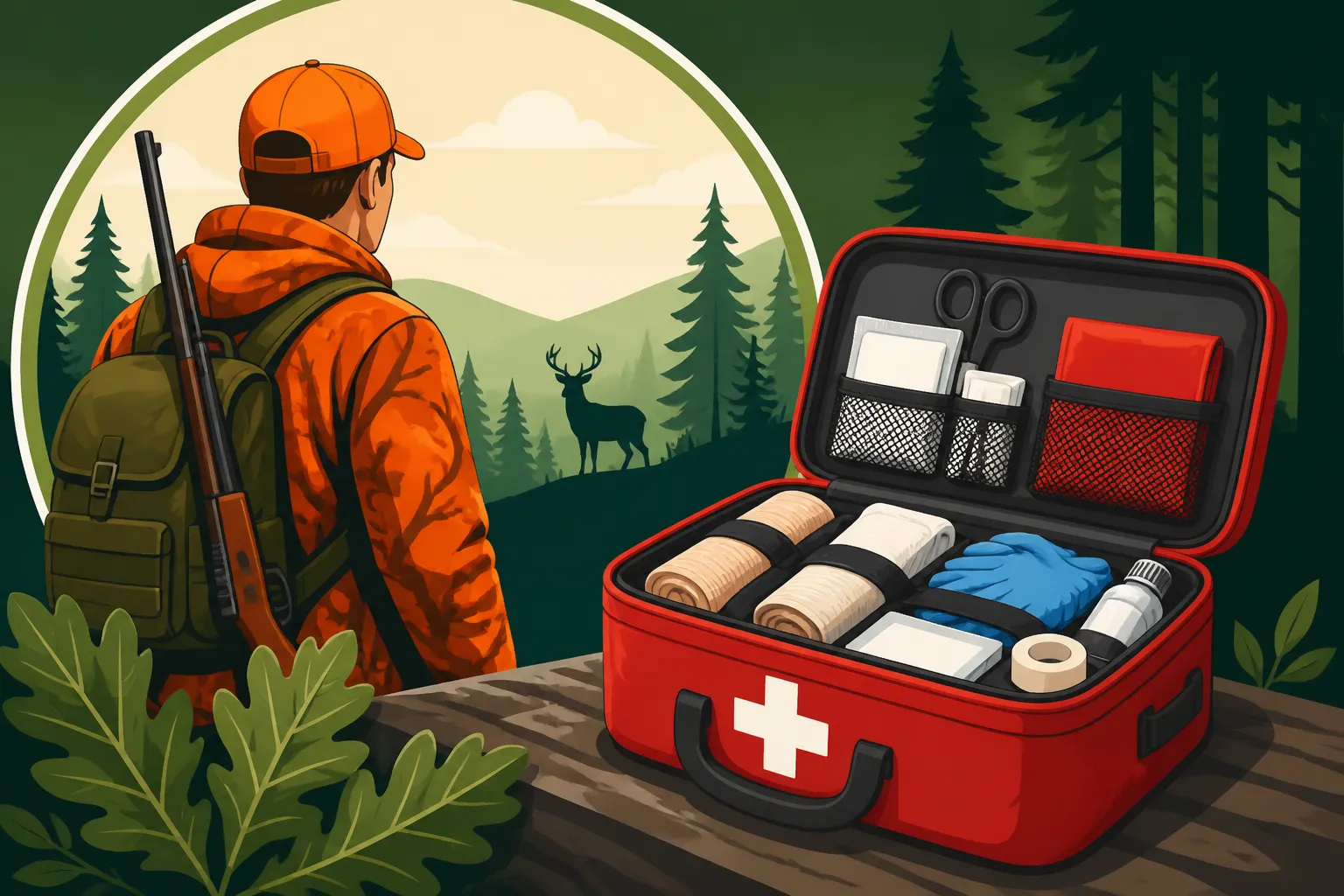
When you're far from any immediate help, controlling bleeding and preventing infection are paramount. Your kit should have a variety of sterile gauze pads, from small sizes for minor cuts to larger abdominal pads for more significant wounds. Adhesive bandages in assorted sizes are a must, along with a roll of strong medical tape to secure dressings. Antiseptic wipes or a small bottle of wound cleanser are critical for cleaning any break in the skin, no matter how small.
For deeper cuts or punctures, consider including a small tube of antibiotic ointment. Perhaps the most critical item for serious bleeding is a hemostatic agent, like QuikClot gauze, which can rapidly stop blood flow. You should also have at least one trauma dressing or an Israeli bandage for wrapping more severe injuries that might require significant pressure. Don't forget a pair of sterile gloves to protect yourself and the injured person.
Addressing Sprains, Breaks, and Mobility Issues
A twisted ankle or a suspected broken bone can turn a hunting trip into a dire situation in an instant, particularly when you're Dragging a Deer Off a Steep Ridge. For these types of injuries, your kit needs to provide support and stability. Elastic bandages, like Ace wraps, are excellent for compressing sprains and offering some support. They can also be used to secure splints.
Speaking of splints, a malleable splint like a SAM splint is invaluable. It's lightweight, waterproof, and can be molded to stabilize a variety of fractures or sprains, from fingers to legs. Pair this with strong medical tape or even a roll of duct tape for securing it firmly. Over-the-counter pain relievers such as ibuprofen or acetaminophen are vital for managing pain and inflammation, allowing you to potentially self-evacuate. A small pair of trauma shears can also be useful for cutting clothing away from an injury without causing more damage.
Medications and Specialized Items
Beyond the obvious wound care, a truly comprehensive backcountry first aid kit needs to address personal health issues and less common but equally serious situations. Always carry any personal prescription medications you need, ensuring you have enough for an extended stay if unforeseen circumstances keep you in the woods longer than planned. For example, a hunter with diabetes would need extra insulin and glucose tabs.
Over-the-counter allergy medications, like antihistamines, are crucial for reactions to insect bites or plants. If you or a hunting partner has severe allergies, an EpiPen should be a mandatory inclusion. Other specialized items might include burn cream for accidental contact with a hot stove or fire, moleskin or blister pads for those long hikes in ill-fitting boots, and a tick removal tool. Even a small container of eye drops can be a godsend after a long day in dusty or windy conditions. Many hunters find that keeping track of all their gear, including these vital safety items, is made easier by utilizing digital tools from companies like GoHunt, which can help organize packing lists and ensure nothing is forgotten.
Customizing Your Kit for Ohio's Specific Challenges
While a general first aid kit is a great starting point, tailoring it to the unique environmental conditions and potential hazards of Ohio's hunting lands, especially a place as rugged as Wayne National Forest, makes it far more effective.
Weather Considerations
Ohio weather, particularly in the fall and winter, can be incredibly unpredictable. A warm, sunny morning can quickly give way to a cold, driving rain or even snow. This means your first aid kit needs to address exposure. For cold weather, an emergency thermal blanket (the Mylar kind) is a non-negotiable item, providing crucial warmth if you're injured and immobile. Hand and foot warmers can offer extra comfort and help prevent frostbite if you're stuck out longer than expected. Remember that Clothing for an Ohio Late Season needs to be matched with gear that can help in an emergency.
In warmer months, or during unexpected heat waves, dehydration and heat exhaustion are major concerns. Include electrolyte replacement packets or salt tablets to help combat fluid loss. Sunscreen and insect repellent also fall under this category of preventative care, as severe sunburn or excessive insect bites can quickly compromise your ability to focus on the hunt or navigate safely. Think about how conditions might affect your ability to get to help, or how they might even contribute to injuries requiring items from your kit.
Wildlife Encounters
Hunting in Ohio means sharing the woods with a variety of critters, some of which can pose medical risks. Ticks are prevalent throughout the state, carrying the risk of Lyme disease and other illnesses. A tick removal tool, along with antiseptic wipes for cleaning the bite area, should always be in your kit. Check yourself thoroughly after any hunt, especially if you've been working through thick cover.
While Ohio's venomous snakes (timber rattlesnakes, eastern massasauga rattlesnakes, and northern copperheads) are generally reclusive, encounters can happen, particularly in rocky areas or dense undergrowth. While specific anti-venom is only available at hospitals, having a pressure immobilization bandage and knowing basic snakebite first aid (immobilize the limb, keep it below heart level, get to medical help immediately) is important. Swelling and allergic reactions from bee stings are also common, so antihistamines are vital. Consider carrying an EpiPen if you or your hunting partners have known severe allergies.
Terrain-Specific Needs
The Appalachian foothills of Wayne National Forest are beautiful but unforgiving. The steep slopes, rocky outcroppings, and dense undergrowth increase the likelihood of falls, sprains, and abrasions. Your kit should reflect this increased risk. Extra elastic bandages and a sturdy splinting material like a SAM splint are paramount for stabilizing twisted ankles or knees. When you're constantly navigating roots, rocks, and mud, having the right Boots for Ohio Mud and Snow is crucial, but even the best footwear can't prevent every slip.
Blister treatment is another terrain-specific necessity. Long hikes over uneven ground, especially when carrying a heavy pack or after a successful deer harvest, can cause painful blisters. Moleskin, athletic tape, and sterile pads can help alleviate discomfort and prevent infection, allowing you to continue your hike out. Having robust gear, including items like a durable pack and navigation tools (perhaps a handheld GPS or a trusted app from a provider like GoHunt), also indirectly contributes to safety by preventing getting lost, which could compound any medical issue.
Beyond the Bandages: Skill and Preparation
A first aid kit, no matter how meticulously stocked, is only as effective as the hands that use it. True backcountry preparedness extends beyond the contents of your pack to include knowledge, communication strategies, and the ability to improvise.
Basic First Aid Training is Crucial
Think of it this way: you wouldn't take a brand-new rifle into the woods without knowing how to operate it, clean it, and safely handle it. The same logic applies to your first aid kit. Possessing a kit without basic first aid knowledge is like having a loaded gun without knowing how to shoot. Taking a wilderness first aid course, or at least a standard Red Cross first aid and CPR course, is invaluable.
These courses teach you how to assess a situation, prioritize injuries, and administer life-saving care for everything from severe bleeding to shock, fractures, and burns. Knowing how to properly apply a tourniquet, improvise a splint using natural materials, or perform CPR could literally mean the difference between life and death for yourself or a hunting partner. This foundational knowledge complements every item in your kit, ensuring you can use them effectively under pressure.
Communication and Emergency Planning
In remote areas, communication can be your biggest challenge. Cell phone service is notoriously spotty, or completely absent, in much of Wayne National Forest. This is why having a robust communication plan is just as important as your first aid kit. Consider investing in a satellite messenger device, such as those offered by Garmin InReach or Zoleo. These devices allow you to send SOS signals to emergency services and communicate via text with contacts, even when far out of cell range. They can be a lifesaver when GPS Units Versus Phone Apps is a real debate due to lack of signal.
Before you even leave home, share your hunting plan with a trusted friend or family member. This plan should include your exact hunting location, expected return time, and who you are with. Use detailed maps, perhaps enhanced with topographical layers available through mapping apps like GoHunt, to mark your routes, potential emergency rendezvous points, and extraction routes. Hunting with a partner whenever possible also provides an immediate second set of hands and another person who can go for help if needed. Understanding How Far to Walk From a Trailhead can inform your communication strategy.
Field-Expedient Solutions
Even with the most comprehensive kit, you might find yourself in a situation where you've exhausted certain supplies or need to improvise. This is where wilderness skills and creativity come into play. For example, if you run out of gauze, clean cloth from a spare shirt can be fashioned into a makeshift bandage. Duct tape, already a staple in many hunters' packs, can be used for everything from repairing gear to securing a splint.
A sturdy stick and a bandana can be used to improvise a tourniquet in a pinch, though this should only be done as a last resort for severe, life-threatening bleeding. Knowledge of local plants might even provide some natural antiseptic or analgesic properties, though always exercise extreme caution and only rely on proven methods. The key is to think critically and adapt to the situation, using the resources you have at hand to manage the injury and survive until help arrives. It's a reminder that safety is an ongoing process of preparation, awareness, and continuous learning.
| Item Category | Basic Backcountry Kit (Minimum) | Comprehensive Backcountry Kit (Recommended) | Purpose |
|---|---|---|---|
| Wound Care | Assorted adhesive bandages, antiseptic wipes, gauze pads, medical tape, small antibiotic ointment | All of the above, plus: Trauma dressing, hemostatic gauze, roll of sterile gauze, trauma shears, sterile gloves, wound wash spray | Cleaning and covering wounds, stopping bleeding, preventing infection |
| Sprains/Breaks | Elastic bandage (Ace wrap), pain relievers (ibuprofen) | All of the above, plus: SAM splint, extra elastic bandages, duct tape, anti-inflammatory medication | Stabilizing injuries, reducing swelling and pain |
| Medications/Personal | Personal medications (if applicable), antihistamine tablets, blister treatment (moleskin) | All of the above, plus: EpiPen (if allergic), burn cream, anti-diarrhea meds, electrolyte packets, tick removal tool | Managing personal health, allergic reactions, environmental ailments |
| Emergency/Survival | Emergency whistle, space blanket | All of the above, plus: Headlamp with extra batteries, fire starter, small multi-tool, compass, signaling mirror, water purification tablets | Signaling for help, warmth, navigation, basic survival |
Disclaimer
This article is for general informational purposes only and does not constitute professional advice. Laws, prices and regulations vary by location and change over time. Consult a qualified professional for guidance on your specific situation.